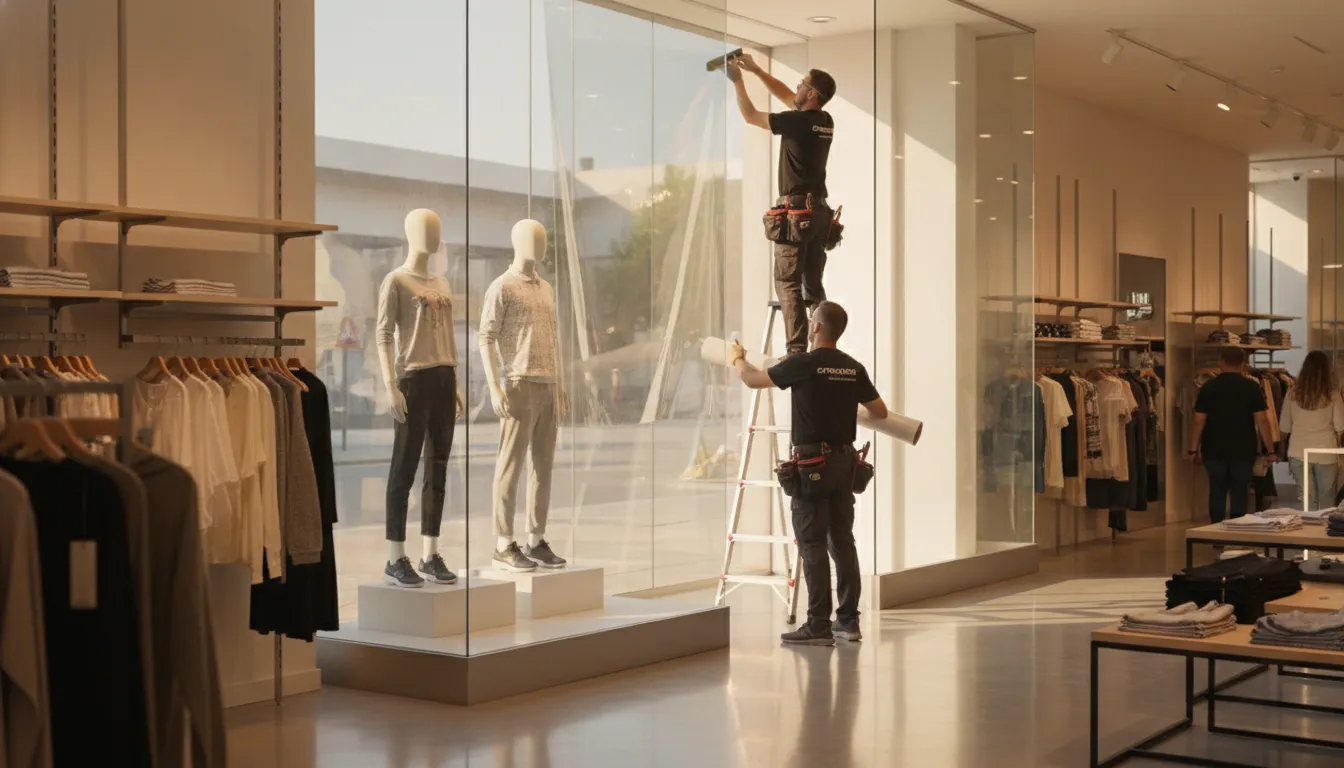
Chicago storefronts work hard to draw customers in, yet the same windows that welcome shoppers also expose your displays, flooring, and fixtures to intense sunlight day after day. On a sunny afternoon, glare can wash out merchandise, make product tags hard to read, and push temperatures up near the glass until browsing feels uncomfortable. Over time, that steady ultraviolet exposure quietly fades clothing, leather goods, printed signage, and display materials that help define your brand.
Window film gives retailers a practical way to manage those conditions. Professionally installed solar control film reduces glare, blocks up to 99% of the harmful UV rays that contribute to fading. And helps regulate solar heat gain so your HVAC system does not have to work as hard in the hot months. The right film preserves welcome natural light and keeps your storefront crisp and inviting, without changing the factory-finished look that makes your store feel polished and professional.
For a window film retail store chicago project, professional solar-control film can reduce glare, block up to 99% of harmful UV rays that contribute to fading. And help regulate solar heat gain so your HVAC system works more efficiently. The right film can preserve natural light without changing the factory-finished look of your storefront.
Those benefits depend on how your windows face the sun, what you sell, and whether you also need privacy or security. First, consider why Chicago retail displays are particularly exposed to solar damage throughout the year. With dense storefronts, long operating hours, and merchandise that sits in direct light, Chicago retailers have a distinct incentive to protect their inventory and improve the shopping experience.
Get a free, no-obligation retail window film estimate for your Chicago store
Why Chicago Retail Storefronts Are Especially Vulnerable to Solar Damage
Retail storefronts are designed to invite people inside. Large glass windows showcase merchandise, bring in natural light, and connect the shopping experience to the street. They also expose displays, flooring, fixtures, and interior finishes to hours of direct sunlight. In Chicago, that exposure changes with the season, but the underlying challenge remains: every day of sunlight can contribute to heat, glare, and gradual material damage.
Store operating hours make the problem more persistent than it may appear. A display positioned beside a south- or west-facing window can sit in direct light from opening through the afternoon. Products may be rotated or replaced, but the surfaces beneath them are still exposed. Over time, uneven fading can leave a noticeable outline where an item, sign, or fixture once blocked the light. Industry estimates commonly attribute roughly 40% to 60% of fading damage to UV exposure, although the exact impact depends on the material, window orientation, and other light sources.
The U.S. Environmental Protection Agency identifies ultraviolet radiation from the sun as a primary cause of fading in interior materials, including fabrics and wood products. That matters for more than apparel. Furniture, rugs, artwork, packaging, flooring, and branded displays can all lose color or develop an inconsistent appearance when exposed repeatedly. The National Park Service also notes that UV-filtering window films can filter part or all of the ultraviolet radiation that contributes to damage in display environments. EPA guidance on UV radiation and fading provides additional context.
Why the storefront itself amplifies the issue
Unlike a typical office with blinds that may be closed during the brightest part of the day, a retail business often needs its windows visible and attractive. Covering the glass completely can hide the merchandise and make the storefront less inviting. Leaving it untreated preserves visibility, but it can increase glare for shoppers, create hot spots near the glass, and expose inventory to ongoing solar radiation.
UV exposure is also a consideration for people working near the storefront. The Centers for Disease Control and Prevention identifies UV radiation as a known risk factor for skin cancers and other health effects. Window film is not a substitute for a complete sun-safety plan. But professionally selected solar control film can reduce unwanted UV transmission while preserving the clear, finished appearance a retail space needs.
For owners evaluating commercial window film, the goal is not simply to make glass darker. The right solar control solution balances UV protection, heat rejection, glare management, visible light, and storefront aesthetics. A professional assessment can account for window direction, display placement, business hours, and the types of merchandise most at risk before recommending a film.
How Window Film Protects Retail Merchandise from UV Fading
Sunlight can make a storefront attractive, but the same exposure can gradually change the color and condition of products near the glass. Clothing, leather goods, printed signage, product packaging, upholstery, flooring, and display fixtures are especially vulnerable when they receive direct sunlight throughout the day. For retailers evaluating window film for a retail store in Chicago, UV protection is one of the most practical reasons to upgrade the glass.
The U.S. Environmental Protection Agency identifies ultraviolet radiation from the sun as a primary cause of fading in interior materials, including fabrics and wood products. Industry research commonly estimates that UV exposure contributes roughly 40% to 60% of fading damage to merchandise, flooring, and fixtures. The EPA explains how ultraviolet radiation affects materials and health, while preservation guidance from the National Park Service describes UV-filtering window films as a way to filter part or all of this damaging radiation.
-
Identify the products most exposed to sunlight
Start by observing the sales floor at different times of day. A display that looks evenly lit in the morning may receive concentrated afternoon exposure. Pay close attention to apparel, handbags, shoes, leather furniture, artwork, printed materials, colorful packaging, and merchandise placed in front windows. Flooring and permanent fixtures can fade too, creating uneven color when displays are moved.
-
Choose solar control film for the fading risk
High-quality solar control window film is designed to filter harmful portions of the light spectrum while allowing useful visible light through. Properly selected film can block up to 99% of harmful UV rays. Helping reduce one of the leading contributors to fading without turning the storefront into a dark or closed-off space. The goal is not to treat every window with an identical product. Exposure, glass type, display layout, and the desired appearance should guide the recommendation.
-
Have the film professionally installed
Professional installation is essential for consistent coverage, clean edges, reliable adhesion, and a factory-finished look. An experienced installer can assess the storefront, explain the difference between solar control and other film categories. And recommend a solution that supports merchandise protection while preserving the appearance of the glass. DIY application can leave bubbles, debris, gaps, or visible seams that undermine both performance and presentation.
-
Protect the full storefront strategy
UV protection is one part of a broader retail glass plan. Solar control film can address fading, heat, and glare, while a separate security window film application may be considered where glass reinforcement and storefront security are priorities. Decorative film can support privacy or visual design, but it should not be treated as a replacement for a solar control product when fading is the main concern.
Window film cannot reverse fading that has already occurred, but the right product can help slow ongoing UV damage and preserve the consistent, polished presentation customers expect. A professional assessment can match the film to each exposure zone and the merchandise it protects.
Reduce Glare and Keep Customers Comfortable in Your Retail Space
Bright storefront windows help a retail space feel open and inviting, but direct sunlight can create an uncomfortable experience when it reaches the wrong areas. Harsh sun can wash out product displays, make point-of-sale screens difficult to read, and create bright reflections across polished surfaces. Customers may avoid browsing near the windows, while employees spend the day squinting, repositioning displays, or dealing with eye strain.
Solar control window film addresses these problems at the glass. It helps manage visible glare and solar heat while preserving the natural light that makes a store feel welcoming. Instead of turning the storefront into a dark or heavily tinted barrier. The right film can soften the intensity of incoming sunlight and maintain a clear view through the windows.
Protect product visibility without darkening the store
Glare control matters because customers need to see products comfortably. Reflections and bright patches can obscure details on merchandise, interfere with digital displays, and make it harder to compare colors or finishes. A balanced solar control film reduces the harshness of the light without eliminating the daylight that supports a bright retail environment.
Professional films are available in nearly invisible options that maintain storefront clarity and aesthetics while providing glare and heat reduction. This is especially useful for retailers who want a factory-finished look rather than an obvious change to the building’s appearance. Customers can still see the storefront, merchandise, and activity inside, while the space feels easier to navigate during the brightest parts of the day. The specific result depends on the building, window orientation, glass, and film selected, which is why an on-site consultation is important.
Create a better experience for customers and staff
Comfort influences how long people browse and how relaxed they feel in a store. Reducing glare can make areas near windows more usable for browsing, consultations, and product demonstrations. It can also make screens more readable for staff, helping them complete transactions without constantly changing the angle of a monitor or moving equipment away from the window.
For a multi-window storefront or a larger retail footprint, professional planning helps keep the appearance and performance consistent from one pane to the next. Sullivan’s Tinting can coordinate large-scale window film installation with the store’s layout, operating needs, and design goals. The result is a brighter, more comfortable space that still looks like the retail environment customers expect, with glare controlled where it causes the most disruption.
How Window Film Cuts Energy Costs for Chicago Retail Stores
Chicago retail stores have to manage two very different energy challenges. Summer sun can drive heat through large storefront windows, while winter weather makes those same glass surfaces a source of uncomfortable cold and heat loss. Solar control window film helps address both sides of that seasonal swing by managing how sunlight and heat move through the glass.
In warm weather, the film reduces solar heat gain before it spreads through the sales floor. That gives the cooling system less work to do, particularly in stores with expansive south- or west-facing windows. The Building America Solution Center, part of the U.S. Department of Energy network, explains that shading and solar control for windows and skylights can help control solar heat gain. See the Building America Solution Center guidance on solar control for windows.
Managing solar heat gain instead of fighting it with HVAC
Without a strategy for the glass, an air conditioner may run longer to offset heat entering through the storefront. That can create uneven comfort, with areas near the windows feeling warmer than the rest of the store. Window film retail store Chicago projects should be evaluated around the building’s orientation, glazing, operating hours, and existing HVAC performance rather than treated as a one-size-fits-all upgrade.
Window film can also help regulate temperature in colder months by reducing heat loss and drafts through untreated glass. Improving window performance can support more consistent indoor conditions in older retail buildings with extensive glazing, complementing the work of the HVAC system rather than straining it.
Why professional installation matters
Energy performance depends on more than selecting a film with a strong-sounding label. The product must suit the existing glass, frame, exposure, and goals of the store. Professional installation helps create a clean, factory-finished look while reducing the bubbles, edge lifting, and uneven application that can undermine appearance and durability. It also gives the installer an opportunity to identify where solar control film makes sense and where another category, such as decorative or safety film, is more appropriate.
There is no universal dollar-savings promise for every storefront. The potential improvement depends on the film, window construction, climate, sunlight exposure, and how the space is operated. A professional assessment can identify the highest-impact glass areas and recommend a practical installation plan for the store’s budget and schedule. For a Chicago retailer, that means greater comfort for shoppers and staff, less strain on HVAC equipment, and a more measured path toward energy efficiency.
Security and Storefront Protection: An Extra Layer of Defense
Retail storefronts face security risks that are difficult to eliminate completely. A broken pane can leave merchandise exposed, interrupt business, and create dangerous glass shards throughout the entry area. Vandalism and attempted burglary can also damage the clean, welcoming appearance that helps customers feel comfortable entering a store. Safety and security window film adds a practical layer of protection without turning the storefront into a visibly fortified barrier.
When properly selected and installed, security film helps hold glass shards together when the pane breaks on impact. This does not make ordinary glass unbreakable, and it is not a substitute for alarms, locks, cameras, or a complete security plan. It can, however, make a forced-entry attempt more difficult and help contain broken glass. That added resistance may deter smash-and-grab thefts and give a retailer more time to respond to an incident. Security window film can be evaluated as part of a broader commercial storefront security strategy.
What security film can help address
- Storefront glass breakage: The film helps retain broken glass instead of allowing shards to scatter immediately across the floor.
- Burglary attempts: A reinforced pane can create an additional obstacle during an impact-based entry attempt.
- Vandalism: The film may help reduce the immediate consequences of a damaged pane while replacement or repairs are arranged.
The security benefit depends on more than the film itself. Professional installation is essential because the attachment system and perimeter anchoring help determine how the film performs when the glass is struck. An experienced installer can review pane size, frame condition, glass type, entry layout, and the property’s security priorities before recommending a solution. The goal is a durable, factory-finished result that supports the storefront rather than creating a distracting visual change.
Security film is different from solar control film
Retail owners should also distinguish safety and security film from solar control film. Solar control film is designed primarily to manage solar heat gain, glare, and ultraviolet exposure. Security film is designed to help hold glass together after impact. Some projects may benefit from both categories, but one should not be presented as a replacement for the other. A consultation can identify which panes need impact protection and which need better control of sunlight, heat, or glare.
Security film can also provide an added UV-protection benefit, helping filter harmful ultraviolet radiation that can contribute to fading inside a store. For a Chicago retailer, combining the right film category with professional installation can protect the customer experience, merchandise, and storefront investment while preserving natural light and visibility.
Choosing the Right Window Film for Your Retail Space
Retail storefronts rarely have just one problem to solve. The front windows may bring in too much afternoon heat, create glare across displays, expose merchandise to ultraviolet radiation, or leave valuable glass more vulnerable to impact. The right window film depends on which of those issues matters most, how much natural light you want to preserve, and how the storefront supports your brand.
Solar control film focuses on heat, UV, and glare reduction, while decorative film is used more for privacy and aesthetic appeal. Safety and security film addresses a different concern by helping hold broken glass together. Each category can be specified to block 99% of harmful UV rays, but they are not interchangeable products. Use the comparison below as a starting point.
| Film Type | Primary Benefit | Best For Retail |
|---|---|---|
| Solar Control | Reduces solar heat gain, glare, and UV exposure while preserving useful daylight. Also blocks 99% of harmful UV rays. | Street-facing displays, sun-exposed sales floors, and stores where customer comfort or product visibility is a concern. |
| Safety/Security | Reinforces the glass and helps hold shards together after breakage, adding a layer of protection. Also blocks 99% of harmful UV rays. | Storefronts concerned about accidental impact, forced entry, or smash-and-grab theft. |
| Decorative/Frosted | Improves privacy, creates visual separation, and supports branding or design details. Also blocks 99% of harmful UV rays. | Fitting rooms, service counters, offices beside the sales floor, and windows that need a branded or frosted appearance. |
Match the film to the glass and the customer experience
Solar control film is often the practical first choice for large windows that make a retail space hot or difficult to browse. A professional installer can help select a film that controls glare without making the storefront look heavily tinted. Nearly invisible options are available when maintaining clear views and a factory-finished look is important.
Safety and security film is better suited to a retailer whose priority is storefront resilience. It does not replace a complete security plan, but it can provide an additional layer between an impact and the interior of the store. Decorative or frosted film can solve privacy and design needs without covering every window or sacrificing the visual character of the space.
Many retailers combine categories. For example, solar control film may serve the primary storefront glass, while decorative film marks a private office and safety/security film is specified for vulnerable entry areas. A professional consultation should consider the existing glass, window orientation, display layout, operating hours, and desired appearance. Before choosing a product, review the factors that influence commercial window film cost in Chicago, then request a tailored recommendation rather than treating every pane the same.
Request a free retail window film estimate for your Chicago storefront today
Frequently Asked Questions
Does window film protect retail merchandise from fading?
Yes. Solar control window film can block up to 99% of harmful UV rays. One of the primary causes of fading for fabrics, wood products, and other merchandise near storefront glass. It can help reduce damage while preserving natural light and visibility. Sources: National Park Service; EPA.
Can window film lower energy use in a Chicago retail store?
It can help manage solar heat gain during Chicago’s warmer months and reduce cooling requirements. Film may also support more consistent indoor temperatures, but actual results depend on the glazing, building orientation, existing HVAC system, season, and selected product. The U.S. Department of Energy’s Building America Solution Center recommends evaluating window attachments based on climate and how they will be used. Source: Building America Solution Center.
Will window film make my storefront look dark or change the view?
Not necessarily. Professional films are available in shades designed to reduce glare and solar heat while maintaining a clear, factory-finished appearance. During a consultation, an installer can recommend a solar control option based on your storefront’s sunlight exposure, display needs, and desired level of visible light.
Is window film effective for retail storefront security?
Safety and security film is a different category from solar control film. When properly selected and professionally installed, it helps hold broken glass together and can add a layer of resistance during an attempted smash-and-grab. It does not make glass unbreakable or replace alarms, locks, cameras, or other security measures.
How long does professional installation take?
The timeline depends on the number and size of windows, access to the storefront, surface condition, and project complexity. A professional assessment provides a more accurate schedule and identifies the right film category for glare, UV protection, energy performance, privacy, or security. Sullivan’s Tinting can review your retail space and prepare a free estimate.
Ready to Protect Your Chicago Storefront?
A professional window film consultation can help you choose the right approach for glare, UV exposure, and solar heat gain without compromising your storefront’s finished look. Sullivan’s Tinting has served Chicagoland retail and commercial spaces since 1988, pairing professional installation with manufacturer-backed quality and a consultative, no-pressure approach.
Every retail space is different, which is why there are no one-size-fits-all answers. A free estimate lets us review your storefront’s window orientation, display layout, and goals. Then recommend the right film category, whether that is solar control, safety and security, or a combination.
Request a free, no-obligation retail window film estimate today and take the next step toward protecting your merchandise and improving customer comfort.