
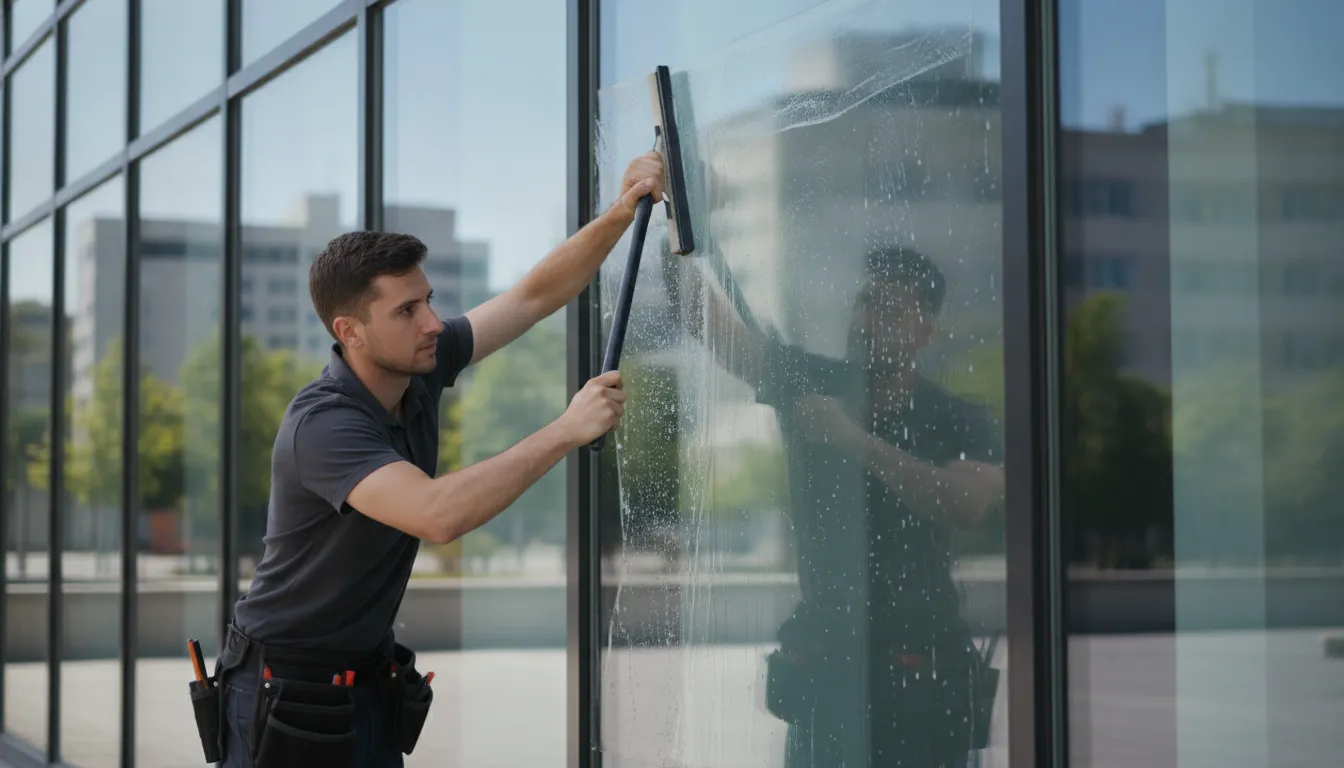
For a property manager, a vulnerable glass entry or storefront can create more than a break-in concern. A shattered pane may scatter glass into occupied areas, interrupt operations, and add replacement work to an already demanding maintenance schedule. Security window film offers a way to improve the performance of existing glass without immediately replacing every pane.
Security window film commercial buildings use is a shatter-resistant laminate that helps hold broken glass fragments together, reducing flying-glass hazards and adding a protective layer to standard windows. It is not bulletproof glass or a guarantee against forced entry, so the right film, attachment method, and professional installation matter.
The best upgrade begins with understanding how security film differs from solar-control or decorative film, then matching the system to the building’s windows, occupants, and security priorities. This guide explains the key considerations alongside Sullivan’s commercial window film solutions for Chicagoland properties.
What Makes Security Window Film Different from Standard Window Film
For a property manager, the key distinction is what the film is designed to do when glass fails. Standard solar-control film is primarily selected to manage solar heat, glare, and ultraviolet exposure. Decorative film is chosen for privacy, branding, or visual design. Security window film, also called anti-shatter film, is a shatter-resistant laminate intended to improve the post-failure performance of existing glass. According to the U.S. Department of Homeland Security guidance on security-resistant window film, the laminate holds broken glass fragments together in one sheet instead of allowing them to scatter as easily.
| Film category | Primary purpose | Key capability |
|---|---|---|
| Solar control film | Manage solar heat, glare, and UV exposure. | Energy efficiency and comfort. |
| Decorative film | Privacy, branding, and visual design. | Appearance and light control. |
| Security window film | Glass retention and shatter resistance. | Fragment retention and flying-glass hazard reduction. |
It improves the performance of the glass already in place
Security film does not turn ordinary glazing into bulletproof glass, and it is not a substitute for every specialized security system. Its value is more practical: it adds a protective layer to existing windows and helps the glass perform better after an impact. Attempted intrusion, accident, or severe weather event. By retaining fragments, the system can reduce the hazard of flying or splintering glass for people inside and near the building.
That makes it a useful option for offices, storefronts, schools, and other commercial properties where replacing large areas of glass would disrupt operations. Property managers can address a vulnerable part of the building envelope while preserving the existing window configuration and maintaining a factory-finished look. The result can be a cost-effective security upgrade compared with a full glass replacement project. Although the right solution depends on the glass type, frame, exposure, and building objectives. For broader planning considerations, see our guide to commercial window film.
Anchoring and installation determine the level of protection
The film itself is only part of the system. For maximum performance, security film may be anchored to the window frame. DHS guidance notes that frame anchoring can help prevent the window from flying in or out during a high-force event. Without the appropriate attachment method, a film may hold fragments together but provide less resistance as a complete window assembly.
This is why commercial projects should begin with an assessment rather than a product label alone. A professional installer can review the glazing, frame condition, access requirements, and likely risks, then recommend whether a simple film application or an anchored system is appropriate. Read more about why professional security film installation matters for performance, appearance, and warranty support.
How Security Window Film Protects Commercial Buildings
For a retail storefront, office, or other commercial property, the first security concern is often the window. A smash-and-grab attempt can create an opening quickly, but the broken glass can also become a serious hazard for employees, customers, and first responders. Security window film adds a resilient layer to existing glass, helping the window stay together after impact instead of scattering fragments across the area.
How film changes a smash-and-grab event
Security film is designed for post-breakage performance. When glass cracks or breaks, the laminate helps hold the fragments together in one sheet. That does not make a window bulletproof or guarantee that forced entry is impossible. It can, however. Make the opening more difficult to create and may slow an intruder long enough to discourage a quick theft or allow an alarm and response system to work.
The U.S. Department of Homeland Security identifies security window film as a measure used against threats that include burglary, robbery, forced entry, blast events, and severe weather. For property managers, that broader application matters. The goal is not simply to make glass harder to break. It is to improve the building’s security profile while reducing the consequences when glass does fail.
- Helps keep broken glass together after impact.
- Reduces splintering and the spread of flying-glass fragments.
- Can support a layered security plan alongside locks, alarms, lighting, and access controls.
Review the options for security window film for safer commercial glass before selecting a product. Film type, glass condition, frame construction, and the property’s threat profile all affect the appropriate solution.
Containing glass hazards after impact
The safety benefit continues after the initial break. By retaining shards, security film can reduce the probability of injury from glass fragments during an intrusion, accidental impact, or severe weather event. It can also help mitigate flying-glass hazards associated with a blast or other intrusion. This is especially relevant near entrances, display areas, corridors, and occupied workspaces where people may be close to windows.
Some security films also reduce glare, which can improve visual comfort for occupants without turning a safety project into a dark, heavily tinted interior. A professional assessment should consider both protection and day-to-day use. Professional installation is important because the film system, glass, frame, and any anchoring method need to work together. The DHS notes that anchoring the film to the window frame can improve performance by helping prevent the window from flying in or out during an impact.
Building Code and Standards Considerations for Security Film in Illinois
For a commercial property, choosing security window film is not only a matter of thickness or appearance. The film, glass, attachment method, and installation details should be evaluated together with the building’s use, existing conditions, and security objectives. A product that performs well in one setting may not be the right fit for another, particularly where facilities have formal safety, security, or resilience requirements.
Ask for documented testing and a project-specific review
Fragment retention films are designed to hold broken glass together after failure, helping reduce the hazard of loose shards. Some 3M fragment retention films have been tested to meet or exceed federal government standards associated with blast mitigation, including GSA, DOD, and USACE security criteria. Those test results can be useful when a project team is comparing products, but they should not be treated as a blanket approval for every building or installation.
For commercial applications, films tested against applicable safety standards and building-code considerations are generally preferred. However, Illinois requirements can vary with the building type, occupancy, location, renovation scope, and other project conditions. This article does not replace a code determination. A property owner or manager should request a designed compliance review with a professional installer and, when appropriate, the project’s architect, engineer, or code official. The review should document the selected film, glass condition, attachment approach, and the performance objective being addressed.
Installation details matter as much as the film specification. Where the design calls for higher security performance. Anchoring the film system to the window frame may help prevent the window from flying in or out during a severe impact. Frame conditions, edge access, glazing type, and compatibility with the existing assembly should be assessed before work begins. Professional installation also helps maintain a consistent, factory-finished look across visible elevations.
Security and energy goals do not have to be treated as competing priorities. High-performance film can provide solar heat rejection while maintaining high visible light transmittance. Allowing a commercial space to remain bright without accepting the full effect of solar heat gain. That is a separate performance characteristic from fragment retention, so the product should be selected by the property’s combined needs rather than by a generic “security film” label. Property managers evaluating commercial building upgrades can compare those objectives during a professional assessment, without assuming that every film category provides the same protection.
What Commercial Clients Report After Installing Security Film
Commercial security film is often evaluated as a safety upgrade, but property managers commonly consider several building outcomes together. The goal is not to make every window perform identically. It is to select a film system that addresses the property’s exposure, occupant needs, and existing glass while preserving a professional appearance.
A More Comfortable, Secure Workplace
One practical outcome is a stronger security profile without immediately replacing serviceable windows. Security window film is used in settings such as airports, government facilities, and transportation hubs, where protecting occupants and vulnerable glass is a continuing concern. Applied to existing glazing, the laminate helps hold broken glass fragments together after impact, reducing the risk created by splintering or flying glass. When the system is designed with appropriate frame anchoring, it can also help keep the window from flying in or out during a severe impact. These features support a broader preventative-maintenance and asset-protection plan, rather than serving as a guarantee against every type of forced entry.
Property managers also look for day-to-day improvements. Some security film products help reduce glare, which can make office areas more comfortable and support productive work near windows. Selected films can reduce solar heat entering the space, easing the demand placed on HVAC equipment during sunny periods. Other models provide UV protection that helps shield interior furnishings, carpets, and other assets from harmful exposure. Privacy can be part of the decision as well, particularly where offices, reception areas, or ground-floor spaces need more visual control without a major glass replacement project.
These combined considerations explain why commercial clients often treat film as a building upgrade rather than a cosmetic tint. The right specification can address security, comfort, privacy, and asset protection while maintaining access to natural light. For a closer look at applications and options, review Sullivan’s commercial window film services for Chicago-area buildings. A professional assessment can identify where security film, solar-control film, or another category is the better fit for the property.
Is Security Window Film Right for Your Building?
Security window film deserves consideration when a building’s glass is exposed to everyday traffic, forced-entry risks, or tenant safety concerns. A high-traffic storefront, for example, may face greater exposure to accidental impact and smash-and-grab attempts than a restricted-access office. Retail properties should also assess vulnerable entrances, display areas, and windows near public sidewalks.
The decision is not only about deterring intrusion. If glass breaks, security film can hold fragments together and reduce the hazard of flying shards, helping create a safer environment for employees, tenants, and visitors. It can also improve the security profile of a vulnerable building without automatically requiring a full glass replacement project. Property managers commonly seek this kind of practical upgrade when they need to address security, privacy, or glare while preserving existing windows.
Consider whether your building has:
- Storefront or entry glass in a high-traffic area.
- Retail exposure to burglary, forced entry, or smash-and-grab activity.
- Glass replacement concerns that make a less invasive improvement worth evaluating.
- Tenants, employees, or visitors who could be exposed to broken glass.
A professional assessment can review the glass type, frame condition, vulnerable locations, and whether anchoring is appropriate for the desired level of protection. To discuss your property, reach out for a commercial window film assessment.
Frequently Asked Questions
Does window security film actually work?
Yes, when the film is selected and installed correctly, it helps hold broken glass together rather than allowing fragments to scatter through the space. An attachment system that anchors the film to the window frame can further improve retention. It is a protective upgrade for existing glass, not a guarantee that the glass cannot break. Federal guidance describes these retention principles.
How much does security window film cost?
There is no useful one-size-fits-all price for a commercial building. The project depends on window measurements, glass condition, film selection, access, frame anchoring, and installation complexity. A property manager should request a site-specific free estimate that identifies the recommended system and scope rather than comparing a film price alone.
Is security window film bulletproof?
No. Security film is not a substitute for bullet-resistant glazing, ballistic glass, or a complete forced-entry system. Its primary role is to improve fragment retention, reduce flying-glass hazards, and make existing windows more difficult to breach quickly. The right specification depends on the building’s threat assessment and the level of protection required.
What is the difference between solar control and security window film?
Solar control film is designed primarily to manage solar heat gain, glare, and visible light. Security film is built around glass retention and resistance to shattering. Some commercial installations combine both goals, but the categories should not be treated as interchangeable. A professional assessment can determine whether one film or a layered approach fits the building.
Can security window film prevent forced entry?
It can slow and complicate some break-in attempts, but it cannot promise that forced entry will never occur. Film may keep broken glass attached to the opening, while frame anchoring can help prevent the pane from being pushed or pulled out. Pairing it with sound access control, locks, lighting, and monitoring creates a more complete security strategy.
Schedule a Free Commercial Security Window Film Assessment
A building-specific review can help property managers match security window film to existing glass, frame conditions, and operational priorities. Sullivan’s Tinting provides professional recommendations for commercial properties, with a focus on practical protection and a factory-finished look. To discuss your building and next steps, schedule a free commercial security window film assessment.