
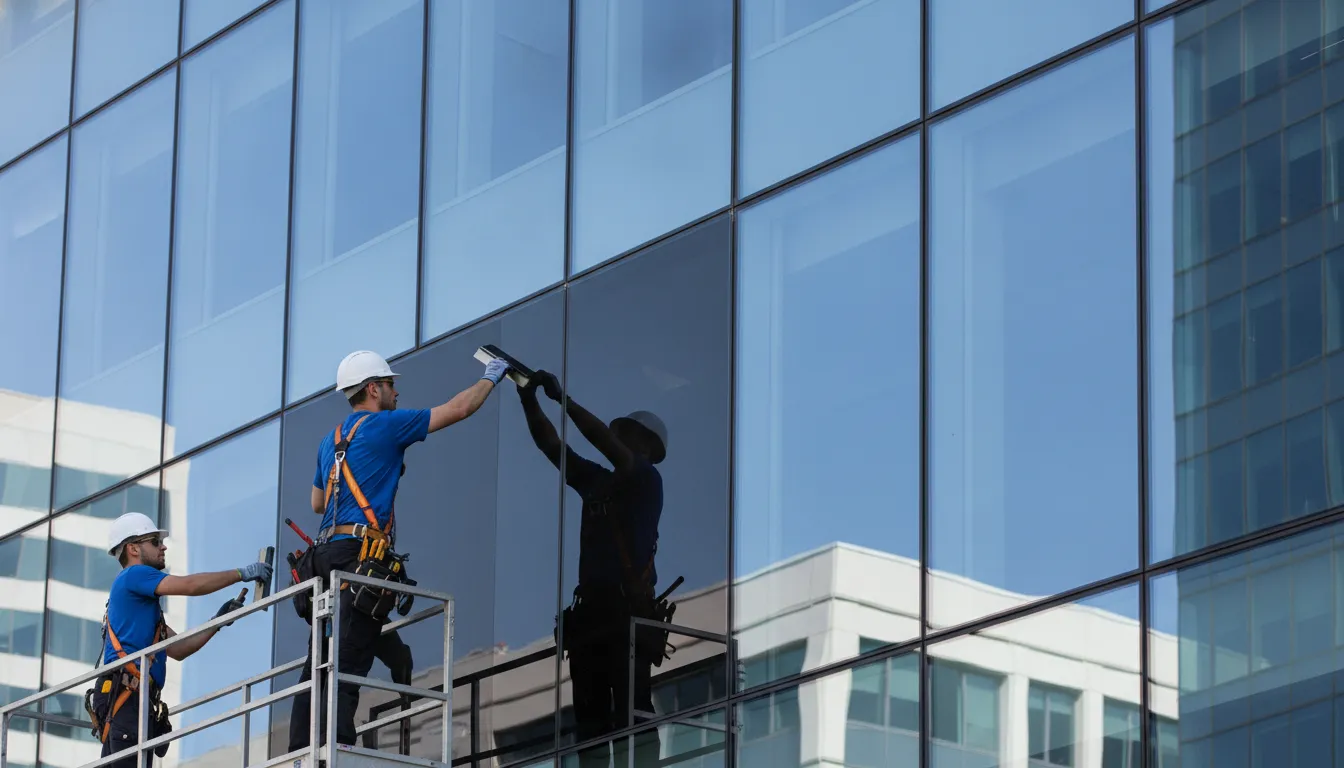
For a Chicago property manager, adding window film across a large commercial building is less about covering glass and more about coordinating a controlled building upgrade. The right plan accounts for window conditions, tenant schedules, access, film performance, and the finished appearance before installation begins.
A large scale window film installation chicago project typically includes a site assessment, detailed measurements, film selection, phased professional installation, and a final quality inspection. Depending on the building’s needs, the scope may address solar heat gain, glare, UV protection, privacy, or security. The U.S. Department of Energy reports that about 76% of sunlight entering standard double-pane windows during cooling seasons becomes heat, making solar control a practical part of commercial planning.
Because every building has a different glass package, layout, and operating schedule, a custom scope matters more than a generic price sheet. Sullivan’s Tinting can help evaluate the project and explain the cost of commercial window film in Chicago without publishing one-size-fits-all pricing. The scale of the work becomes clearer when you look at what the installation actually includes.
Request a free scope assessment for your Chicago commercial building.
What Counts as a Large-Scale Window Film Installation in Chicago
A large-scale commercial project is defined less by one exact window count than by the planning required to deliver a consistent result across an active property. It may involve several floors in an office building, a medical facility with many rooms, a broad retail storefront, or multiple buildings managed under one organization. Large glass areas can also make a project large scale when the installation requires specialized access, precise scheduling, and coordination with tenants, facilities teams, or other contractors.
Project complexity is another important measure. A professional installation may need to be completed zone by zone, floor by floor, or in phases around business hours. The scope can include different glass types, window sizes, and exposure conditions within the same building. A custom estimate based on measurements, film selection, and location helps identify the right sequence before work begins. Rather than treating every pane as though it has the same requirements.
More than one film category may be part of the scope
Commercial properties rarely need one identical product everywhere. Solar control film may be appropriate along sun-facing elevations where glare, heat gain, and HVAC demand affect comfort. High-performance films can support year-round performance without excessively reducing visible light, which helps preserve a bright, professional interior. Commercial window film can also block up to 99% of UV rays, helping protect furnishings, flooring, displays, and other interior finishes from damage.
Other areas call for a different solution. Frosted or decorative film can create privacy in conference rooms, medical spaces, offices, and storefronts while maintaining a finished appearance. Reflective options may support a specific exterior design or privacy objective. Security film is selected when reinforcing glass against breakage is a priority, while anti-graffiti film can help protect vulnerable glass in high-traffic locations. Sullivan’s Tinting provides security window film for commercial buildings as part of this broader professional approach.
| Film Category | Best For | Primary Benefit |
|---|---|---|
| Solar control film | Sun-facing offices and storefronts | Reduces heat gain and glare |
| Decorative or privacy film | Conference rooms and medical areas | Adds privacy without losing natural light |
| Safety and security film | Glass reinforcing break-in protection | Helps strengthen glass against breakage |
| Anti-graffiti film | High-traffic storefronts and lobbies | Protects vulnerable glass from vandalism |
That combination of scale, access, coordination, and product requirements is what makes a large scale window film installation chicago project different from a small, isolated application. Professional installation keeps the work organized, and each area can achieve the clean, factory-finished look expected in a commercial environment.
How Large-Scale Projects Are Phased Around Business Operations
A commercial window film project should fit the building’s operating schedule, not force the business to work around an improvised installation. For a large scale window film installation Chicago property managers can plan with a professional team. The process begins with a site review, clear access requirements, and a sequence that protects normal operations. The goal is a clean, predictable rollout with minimal interruption for employees, customers, patients, tenants, and visitors.
Phasing also makes quality control easier. Professional installers can prepare each area properly, maintain consistent application conditions, and confirm that the film is adhering correctly before moving to the next zone. That attention supports the factory-finished appearance expected in a commercial setting. It also helps the team match the recommendation to the building’s needs, whether the priority is glare control, privacy, solar heat management, or another commercial application.
- Build the schedule around the business calendar. Start by identifying operating hours, peak customer periods, security restrictions, cleaning schedules, deliveries, and any dates when a department cannot be disturbed. Some work may be scheduled after hours or on weekends, while other areas can be completed during normal hours with appropriate controls. A custom estimate based on window measurements, film type, location, and access conditions gives the project team a practical starting point.
- Divide the building into manageable zones. Multi-floor properties are often addressed floor by floor, while larger open spaces may be divided by wing, suite, facade, or work area. Zone-by-zone sequencing limits the footprint of active work and gives building management a clear view of what is complete, what is in progress, and what comes next.
- Coordinate with each department before its installation window. Department leaders can help identify sensitive equipment, occupied offices, patient-care considerations, conference schedules, and furniture that needs to be moved. Advance communication also gives employees time to clear window areas and understand temporary access changes. This is especially important when glare reduction or privacy improvements are intended to support productivity without removing natural light.
- Protect the work area and complete the installation professionally. The crew prepares surfaces, controls the immediate workspace, applies the selected film, and leaves the area ready for use. Commercial film requires professional installation for proper adhesion and long-term durability. Sullivan’s Tinting explains why professional window film installation matters when appearance and performance must remain consistent across a large property.
- Review each phase before releasing the next one. A supervisor or designated contact can walk the completed zone with the property team, note touch-ups, confirm access is restored, and update the schedule. This phased feedback loop keeps small issues from spreading across multiple floors and helps the final project deliver a consistent result with less disruption.
With personalized recommendations and a documented sequence, large commercial work becomes a managed improvement rather than a building-wide interruption. The right plan allows the business to keep serving its customers while the installation advances one controlled area at a time.
Project Management for Multi-Floor Commercial Buildings
Multi-floor window film work is a coordination project as much as an installation project. Property managers, building engineers, tenants, general contractors, security teams, and the installation crew may all have requirements that affect when and how each window can be accessed. A clear plan keeps those requirements aligned while preserving the consistent, factory-finished look expected across the building.
Sullivan’s Tinting provides a single point of contact for commercial customers, so questions do not have to pass through several disconnected vendors. Before work begins, the team can review the building’s window types, occupied areas, access rules, loading procedures, elevator use, and any contractor activity already scheduled. That information helps establish realistic work zones and prevents avoidable conflicts. Such as arriving at a floor that is restricted, occupied by another trade, or unavailable because of a tenant meeting.
Coordinating access and installation logistics
Access planning is especially important on upper floors and large glass elevations. Depending on the building, the project may require freight-elevator reservations, floor protection, controlled entry, lift access, or coordination with a building representative. The installation sequence should account for where equipment can be staged, how materials move through the property. And which areas need to remain open for employees, visitors, and emergency pathways.
A floor-by-floor or zone-by-zone sequence also makes progress easier to track. The project manager can confirm which areas are ready, identify outstanding access issues, and communicate the next work window to property management and tenants. If a general contractor is completing renovations, window film work can be coordinated with cleaning. Glazing, painting, or punch-list activities rather than forcing teams to work around one another.
Keeping the plan tied to building performance
The operational goal is not simply to cover as much glass as possible. The right plan places film where it can address the building’s specific challenges, including solar heat gain, glare, privacy, and interior exposure. Commercial window film can block up to 99% of UV rays, while strategic placement may help manage glare and support more comfortable work areas without removing natural light. The film category and placement should be selected through a professional assessment, not applied uniformly without considering orientation, occupancy, and existing glass.
For security-focused areas, a properly selected safety film can also strengthen glass against breakage. This may be relevant at entrances, vulnerable sidelights, or other locations identified during the walkthrough. Sullivan’s Tinting is family-owned and operated and has served the region since 1988, bringing 36+ years of window film experience to projects throughout Illinois and Wisconsin. That regional expertise helps the team communicate clearly with local property managers and keep a complex installation moving from approved scope to final walkthrough.
Quality Control and the Post-Installation Inspection Process
A large commercial window film project is not complete when the last pane is covered. Quality control confirms that every elevation, floor, and work area meets the same visual and performance standard. For a property owner or facilities team, the goal is a factory-finished look: clean lines. Consistent coverage, secure edges, and an appearance that complements the building rather than calling attention to the film.
Precision begins with the cut
Before film is applied, each piece must be measured and cut for the specific glass opening. Commercial buildings rarely have perfectly identical panes across every floor. Mullions, framing, corners, hardware, and architectural variations can affect the fit. Precision cutting helps the installer maintain even margins and avoid unnecessary seams, overlaps, or exposed glass at the edges. The finished result should look intentional from inside and outside, whether the project involves a few large storefront panes or hundreds of office windows.
Adhesion and appearance are inspected together
Proper adhesion is essential to long-term durability, which is why commercial window film should be handled through professional installation rather than an improvised or do-it-yourself process. The installation team checks the film as it bonds to the glass, looking for issues that could affect the finished appearance or performance. The review includes edge conditions, visible debris, bubbles, creases, lifting, and inconsistent application. Some moisture or visual haze can be part of the normal curing process, but the team should explain what to expect and identify anything that requires attention.
That inspection matters beyond aesthetics. Solar-control film can support better control of heat and glare, while privacy or security film serves a different building need. When the film is applied correctly, the property receives a professional-looking upgrade that supports the workspace, including comfort and productivity, without making the installation itself the focus.
Walkthrough, touch-ups, and warranty documentation
After installation, the project team should complete a walkthrough with the property manager or designated representative. This is the opportunity to review completed areas, compare the work against the agreed scope. Note any touch-ups, and confirm that access panels, doors, furnishings, and surrounding finishes are in proper condition. A disciplined closeout process gives the building team a clear record of what was completed and what to monitor during curing.
Sullivan’s Tinting brings more than 36 years of local window film experience to commercial projects. Professional installation is paired with manufacturer-backed warranties, giving owners and managers documentation for the selected product and installation. A careful final inspection, followed by responsive touch-ups when needed. Helps ensure that a large-scale window film installation delivers the factory-finished standard expected from a significant investment in the workplace.
Request a Scope Assessment for Your Chicago Commercial Building
Every commercial building has a different mix of glass, operating hours, tenant needs, and performance goals. A successful large-scale window film installation in Chicago starts with understanding those conditions before a film category is selected. Sullivan’s Tinting takes a consultative approach so property owners, facility managers, and contractors can make an informed decision without committing to a one-size-fits-all package.
The first step is an in-person walkthrough. A professional reviews the building, discusses concerns such as glare, solar heat gain control. Privacy, UV protection, or safety, and examines how the windows relate to the space inside. Window measurements are part of the assessment as well. The scope may differ between a sun-exposed office, a street-facing storefront, a medical area, and a shared conference room, so the recommendation should reflect the actual site conditions.
That information supports a personalized recommendation. Depending on the building’s priorities, the appropriate solution may involve solar control film, decorative or privacy film, safety and security film, or anti-graffiti film for vulnerable glass. The goal is to match the film category and installation plan to the building, rather than treating every pane as though it has the same job. Commercial window film can also be evaluated as part of broader comfort, visibility, and workspace objectives.
The estimate is free and no-obligation. It is developed around the measured window area, selected film type, installation complexity, and project location, so the property team has a clearer basis for planning. For additional planning context, review the commercial window film cost guide, then request an assessment for the specifics of your building.
Sullivan’s Tinting provides professional installation backed by more than 36 years of local expertise and manufacturer-backed warranties. To discuss a multi-floor office, medical facility, storefront, or other commercial property, request a free estimate and take the next step toward a precise, practical scope.
Request a free estimate for your large-scale window film installation.
Frequently Asked Questions
How long does a large-scale commercial window film installation take?
There is no single timeline because the schedule depends on window count, building height, access requirements, film type, and whether work must be phased. A professional assessment can establish the installation sequence, crew requirements, and realistic completion window before work begins. Multi-floor projects are often organized by floor, zone, or department so the plan remains manageable.
Does the installation disrupt normal business operations?
It can be planned to limit disruption. Professional installers may coordinate after-hours work, floor-by-floor scheduling, or smaller work zones around tenant and employee needs. Your project plan should account for furniture, access restrictions, occupied offices, security procedures, and daily cleanup. Those details are reviewed during the scope assessment rather than assumed after the project starts.
What types of window film are used in large commercial projects?
The appropriate category depends on the building’s goals. Solar control film can address heat gain and glare, while decorative or frosted film can improve privacy and visual separation. Safety and security film can add a layer of protection by helping strengthen glass against breakage. Anti-graffiti film may also be considered for vulnerable surfaces. A personalized recommendation should match the film to each area instead of treating every window identically.
How much does a large-scale commercial window film project cost?
Commercial project pricing is custom, not a standard per-building figure. The estimate depends on measured window area, selected film, glass and frame conditions, access, site location, and installation complexity. Sullivan’s Tinting provides a no-obligation free estimate after reviewing the building and its priorities, so you can compare an appropriate scope rather than rely on a generic number.
Ready to Plan Your Chicago Commercial Project?
A clear scope assessment can help align film selection, measurements, access requirements, and installation phasing before work begins. For a practical next step, request a free scope assessment for your Chicago commercial building. Sullivan’s Tinting can review the property and recommend an approach suited to its windows, occupants, and operating schedule.