
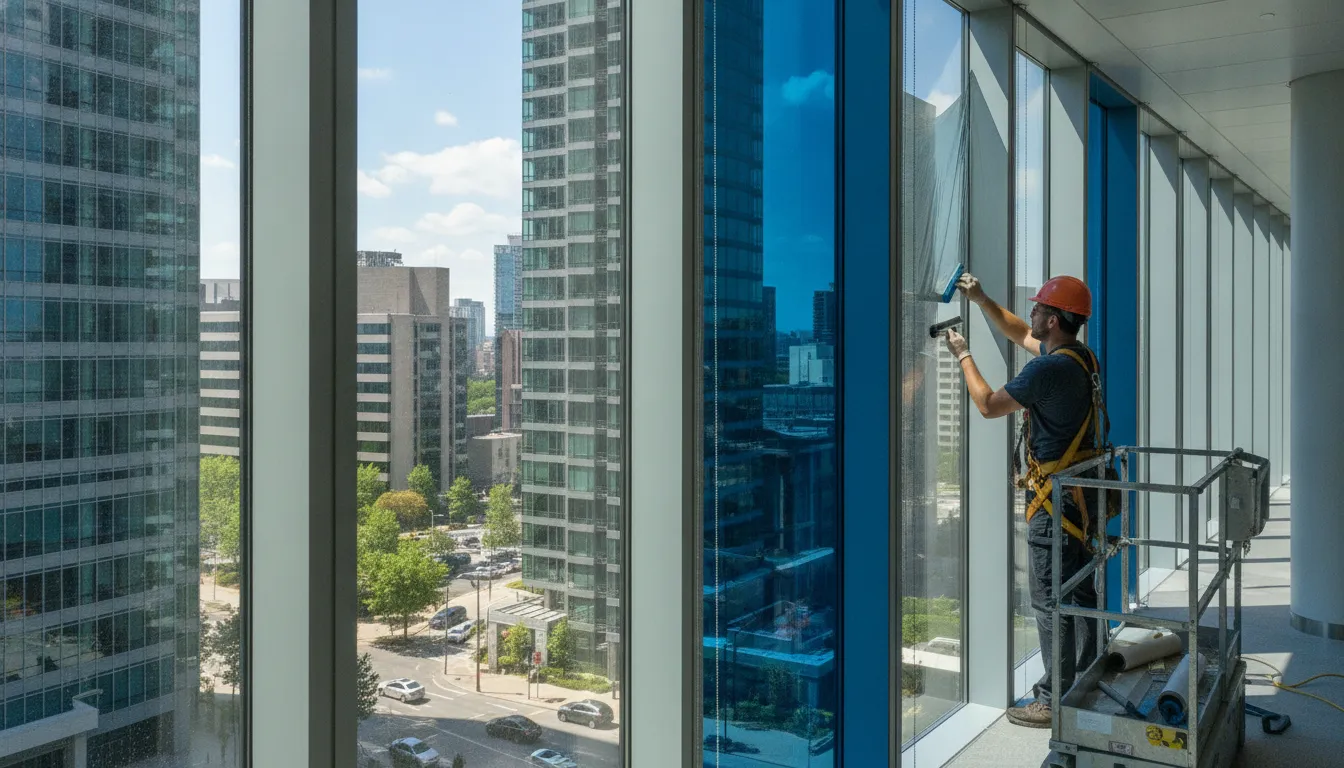
Commercial building owners in Chicago face soaring energy bills from large, untreated office windows. Standard glass allows heat and glare to ruin indoor comfort and drive up running costs.
The average commercial window film cost chicago building owners pay ranges from $6 to $22 per square foot, depending on the film type. Basic dyed films cost $6 to $9 per square foot, while dual-reflective films range from $9 to $12 per square foot. Premium ceramic films often cost $15 to $22 per square foot, while commercial security films run between $12 and $20 per square foot. These standard rates cover the window film and the expert labor needed to achieve a clean, factory-finished look on your glass. Because Chicago high-rises and storefronts vary in height and access, property managers should ask for a custom site visit to get exact pricing.
To make an informed choice for your building, you need to understand the main factors that affect your final estimate. Many local details play a major role when you invest in commercial window film services. Let us walk through what actually sets the price and how you can plan for it.
Get Your Free Commercial Window Film Estimate in Chicago
What Determines the Commercial Window Film Cost in Chicago
The type of film you select is the largest cost factor. Commercial window film jobs in the area mostly range from 6 to 22 dollars per square foot. This price rests on the type of film you choose. Simple dyed film is the cheapest choice at 6 to 9 dollars per square foot. Dual-reflective film offers better heat block and mostly costs 9 to 12 dollars per square foot. Ceramic film is a top option that blocks heat well and lasts long. It mostly ranges from 15 to 22 dollars per square foot. If you need safety upgrades, security window film mostly costs 12 to 20 dollars per square foot.
Pricing by window film technology
We install several types of film to match your needs:
- Dyed films for basic shade and privacy
- Dual-reflective films for balanced solar control
- Ceramic films for maximum heat rejection
- Security films for glass break protection
These ranges serve as a guide for your budget. But every workspace is unique. If you want to compare options for your building, you can read our deep dive on office window tinting cost factors. That guide will show you more details for offices.
Impact of glass type and project size
The size of your building and the type of glass you have will affect the total cost. Larger jobs often get better rates per square foot because of bulk savings. On the other hand, small storefronts may have higher unit prices. The current glass matters too. If your windows have special coatings or old film that must be peeled off first, the labor goes up.
High-performance solar films do more than block glare. They also lower your power bills. Studies by the U.S. Department of Energy show that solar window films block heat gain and help manage indoor climate. This makes your workspace much more pleasant for workers. It also lowers the strain on your cooling systems during hot summer months.
Chicago building height and site access
Where your building sits in Chicago is another big factor. Local needs will shape labor rates. For example, high-rise buildings in the Loop often present unique tests. Getting film to upper floors can take more time. If the crew needs to use swing stages, scaffolding, or special lifts to reach the glass, labor costs will rise.
Every commercial project has its own set of needs. This is why we never give a fixed, one-size-fits-all price online. Instead, we use our 36 years of local work to give custom quotes. We advise using our commercial window film services for a factory-finished look that lasts. To get an exact price for your building, you can contact us for a free estimate.
Why Commercial Window Film Pricing Varies by Project
No two business spaces are exactly the same in Chicago. When you plan your building budget, you will find that commercial window film services vary in price. Local factors like building design and old glass coatings make a big difference in final labor needs. Professional installers must review your space to build a custom estimate that fits your budget.
Building access and height
The height of your windows is a major factor in pricing. For low buildings, crews can use simple ladders or ground tools. But high-rises in the Chicago Loop present unique setup needs. These tall structures often need swing stages or scaffolding, which needs more time and specialized safety gear.
This extra work raises the labor portion of your quote because high-rise glass demands highly skilled crews. For example, skylights, atrium glass, or multi-story lobbies need specialized lifts. Installers must carefully move these lifts across delicate interior floors. This careful prep work adds time to the job.
Window count and glass type
The number and size of your windows will shape your final cost. Large glass panes use more material and need careful handling. If your building has old glass coatings, crews must remove them first. This prep step takes extra time and labor.
Many Chicago buildings already have old window films or safety films. Removing these old materials is a delicate process. Installers must scrape and clean the glass to prepare it for the new film. Any leftover glue can ruin the factory-finished look.
To compare these factors for workspaces, read our guide on office window tinting cost for more details. Advanced film types also affect your budget. According to the U.S. Department of Energy, high-performance window films help manage building temperature by reducing solar heat gain. These premium films cost more upfront but give you year-round energy efficiency.
Labor timing and scheduling
The schedule of the install crew is another key factor. Business owners often choose after-hours commercial installations. This choice prevents disruption to daily operations and keeps staff productivity high. Crews work during nights or weekends when the office is empty.
This after-hours access and staging influences final labor estimates. While weekend labor may carry a higher rate, it keeps your business running without any downtime. It also allows crews to work faster since they do not have to work around your staff.
In large office buildings, after-hours work is the best way to keep tenants happy. Installing film during the day can cause noise and block walkways. Planning the job for the weekend keeps your building quiet and productive.
Key Factors That Drive Cost: Size, Film Type, and Building Access
When planning your total commercial window film cost in Chicago, several factors drive the final price. A skilled team does not just guess at a rate. Instead, they look at your exact glass, your building design, and what you need the film to do. Every commercial space is unique, which is why a custom site visit is needed to get a real quote.
Window size and system scale
A custom site visit allows experts to look at the style and size of your window systems before they write an estimate. The total area of your glass is the most basic cost driver. Bigger windows mean more material and more labor time.
A large job with many small panes can take longer than a few big, flat panes because they need more precise cuts. To get a clear office window tinting cost, a team must inspect and measure each window system. The design of your current frames and the size of each pane will directly affect the final labor bid. Even the type of glass in your current windows can change how much work is needed.
Film type and performance options
The type of film you choose has a major impact on your budget. Simple dyed films are the most budget-friendly, while high-tech options cost more. For example, dyed films usually cost about $6 to $9 per square foot. Dual-reflective films range from $9 to $12 per square foot, and safety or security films fall between $12 and $20 per square foot.
If you want top energy savings, ceramic films cost about $15 to $22 per square foot. These high-performance options manage heat by blocking solar heat gain, which improves year-round energy efficiency. Your choice should match your main goals, whether you need safety, heat control, or simple glare reduction. Each film type offers different benefits, so picking the right one is key to your long-term comfort.
Building access and project height
How easy it is to reach your windows also drives labor costs. Ground-floor storefronts are quick and simple to film. But windows on high floors or in tall lobbies present unique work. A high-rise in the Loop might need swing stages, lifts, or tall scaffolds to reach the glass safely.
These setups add time and risk, which raises the final cost. To get a clear view of these details, we suggest a custom site visit. During this check, an expert will plan for access issues and help you select the best commercial window film services for your own property.
Commercial Window Film vs Residential Film: Why the Pricing Logic Differs
Putting window film on a commercial building is not like a home job. The size of the building, the types of film used, and the work hours all change how a firm builds a quote. While a home project aims at comfort, a business upgrade must meet strict workplace and safety needs. Knowing these main details helps business owners plan their budgets.
Project scale and film types
A commercial window film upgrade in Chicago ranges from six to twenty-two dollars per square foot based on the film type. Standard dyed films cost six to nine dollars, while dual-reflective options run nine to twelve dollars. Top-tier ceramic films cost fifteen to twenty-two dollars per square foot because they offer the best heat protection. Business owners choose these films as a workspace upgrade rather than just a simple tint.
Labor and building access
Work on commercial buildings often requires after-hours access and special staging, which adds to labor costs. Unlike homes with standard ground floors, commercial sites can have high glass and complex layouts. A high-rise building in the Chicago Loop might need swing stages or special lifts to reach high windows safely. Crew members often work at night or on weekends to keep from slowing daily tasks.
Business value and comfort
Business and building owners look at window film as an asset that boosts work output and safety. For example, adding commercial security window film protects a building from break-ins. Based on Department of Energy data, high-performance window films control indoor heat by blocking solar rays and lowering energy bills. These energy gains reduce HVAC stress and keep workers cool throughout the year.
| Project Detail | Residential Film | Commercial Film |
|---|---|---|
| Film options | Dyed or solar control window films | Ceramic, dual-reflective, or thick safety films |
| Square foot cost | Based on standard home layouts and access | Six to twenty-two dollars per square foot |
| Labor times | Standard daytime hours on weekdays | After-hours and weekend schedules to avoid blockages |
| Main targets | Home comfort and daily glare control | Facility security, work output, and energy savings |
What to Expect in a Commercial Window Film Estimate
Planning a commercial project can feel like a big task. Property managers need to know just how much a project will cost before they start. Our family-owned team has served Chicago since 1988 with expert care. Because every building is unique, we never use a single flat rate. We work with you to find your true needs and goals.
Our consultative approach
At Sullivan’s Tinting, we focus on a consultative sales approach with free estimates. We do not guess at the price or work with fixed fees. Our team looks at the age of your building, the style of your glass, and how much sun you get. This custom planning ensures you get the best window film to save power and keep tenants happy.
Five steps to a custom quote
Getting an accurate commercial window film cost in Chicago needs a clear process. We make the path simple, professional, and clear from start to finish. Our expert team will guide you through each step of the way so you feel secure. You can trust us to find the best fit.
- First contact and meeting. First, you share your main goals and timeline for the window film project with our team. We talk about issues like high energy bills, sun glare, or security needs to find the right film.
- Site visit and measurements. To give you an exact price, our team visits your commercial building and measures every pane of glass. If an on-site visit is hard to schedule, you can send clear photos with window measurements instead.
- Film selection. We match our top-quality commercial window films to the specific needs of your workspace. Our team will suggest solar, decorative, or safety options that fit both your budget and your building style.
- Detailed custom quote. You will get a full written plan that breaks down all of the film and labor costs. This quote makes it easy to analyze the window film vs window replacement cost for your business.
- Professional installation. Our team plans the work, often during after-hours, to make sure we do not disrupt your daily business. Indeed, professional window film installation is key to getting the best results from your new film.
How to Get an Accurate Commercial Film Quote for Your Building
Getting a reliable price estimate for your building does not have to be hard. Because commercial projects vary by building type, a good installer will provide a custom quote rather than a flat rate. You can secure a precise price by taking a few simple steps before you call.
Floor Plans and Measurements
First, you should collect basic details about your glass. Having floor plans or window measurements helps your team plan the project. If you do not have drawings, you can take quick measurements or clear photos of the panes. These details help your installer draft a reliable cost estimate for your commercial window film services.
When you share photos of your windows, make sure to show the frame and any surrounding obstacles. This helps the team check for high-reach glass or tight corners that might need special scaffolding or lift tools. Providing these details up front prevents unexpected labor fees later in the process.
Film and Warranty Preferences
Next, decide which window film fits your business goals. You may want a dyed film for basic glare control, a dual-reflective film for heat reduction, or a thick security film to protect your storefront glass. Be sure to ask about the factory warranty for each film type. Choosing a film that fits your needs ensures you get a durable upgrade rather than a short-term fix.
A professional installation is the key benchmark for ensuring long-term value. When you work with a top provider, you can expect a factory-finished look that resists peeling and bubbling. This level of quality protects your investment and ensures the glass functions as intended for years.
Professional Site Assessments
Finally, you should choose an installer that conducts a thorough, in-person site assessment. While photos and plans help for early pricing, an on-site visit is essential for a final bid. The team will inspect your glass types, measure the frames, and find any active glass coatings that could affect the installation. This visit ensures your quote matches the exact physical needs of your building.
To ensure the best results, look for a team with proper credentials. The International Window Film Association provides professional accreditation in solar control and safety films to help you find qualified installers. Working with an accredited company ensures a safe setup and a high-performance result. This is why investing in professional window film installation is so important for local business owners.
Request Your Custom Commercial Window Film Quote Today
Frequently Asked Questions
How much does 3M window film cost?
The cost of 3M window film varies based on the product line and project scale. In the Chicago area, commercial window film generally ranges from $6 to $22 per square foot installed. Standard solar films are on the lower end, while premium ceramic and security options cost more. You can get a precise price with a free estimate.
Why is window film so expensive?
The price of window film reflects its high-quality materials and the labor needed for installation. High-performance films use special layers to block solar heat and stop 99% of harmful UV rays. According to the U.S. Department of Energy, quality films manage building temperatures and improve year-round efficiency. This reduces cooling bills and protects indoor spaces from sun fading.
How is commercial window film priced?
Commercial window film is priced by the square foot of glass being treated. Total costs depend on the film type, such as dyed, ceramic, or safety films. Prices also change based on project complexity. For example, high-rise buildings in the Chicago Loop may need staging, while business owners often prefer after-hours labor to avoid day-to-day disruption. A local specialist can provide a custom quote after a site visit.
Is professional window film worth it?
Yes. Professional installation ensures a clean, factory-finished look without bubbles or peeling. It also protects your investment with strong manufacturer warranties. According to research in PubMed, the International Window Film Association provides accreditation to help people find quality installers for solar and safety films. This ensures the film is placed safely and works as intended for years.
Ready to Get Your Chicago Commercial Window Film Estimate?
Waiting to install commercial window film can lead to high utility bills and severe sun damage. Untreated glass lets in too much solar heat and harmful UV rays, which hurts indoor comfort and drives up your HVAC costs. Upgrading your windows now will block glare and protect your office floors and furniture from fading. Our family-owned team has served the Chicagoland area since 1988. We provide reliable commercial window film services for all types of buildings, from small shops to large offices. We handle everything from the initial site visit and measurements to the final cleanup.
Ready to get started today? Request Your Free Commercial Window Film Estimate Online for a custom quote tailored to your building.