
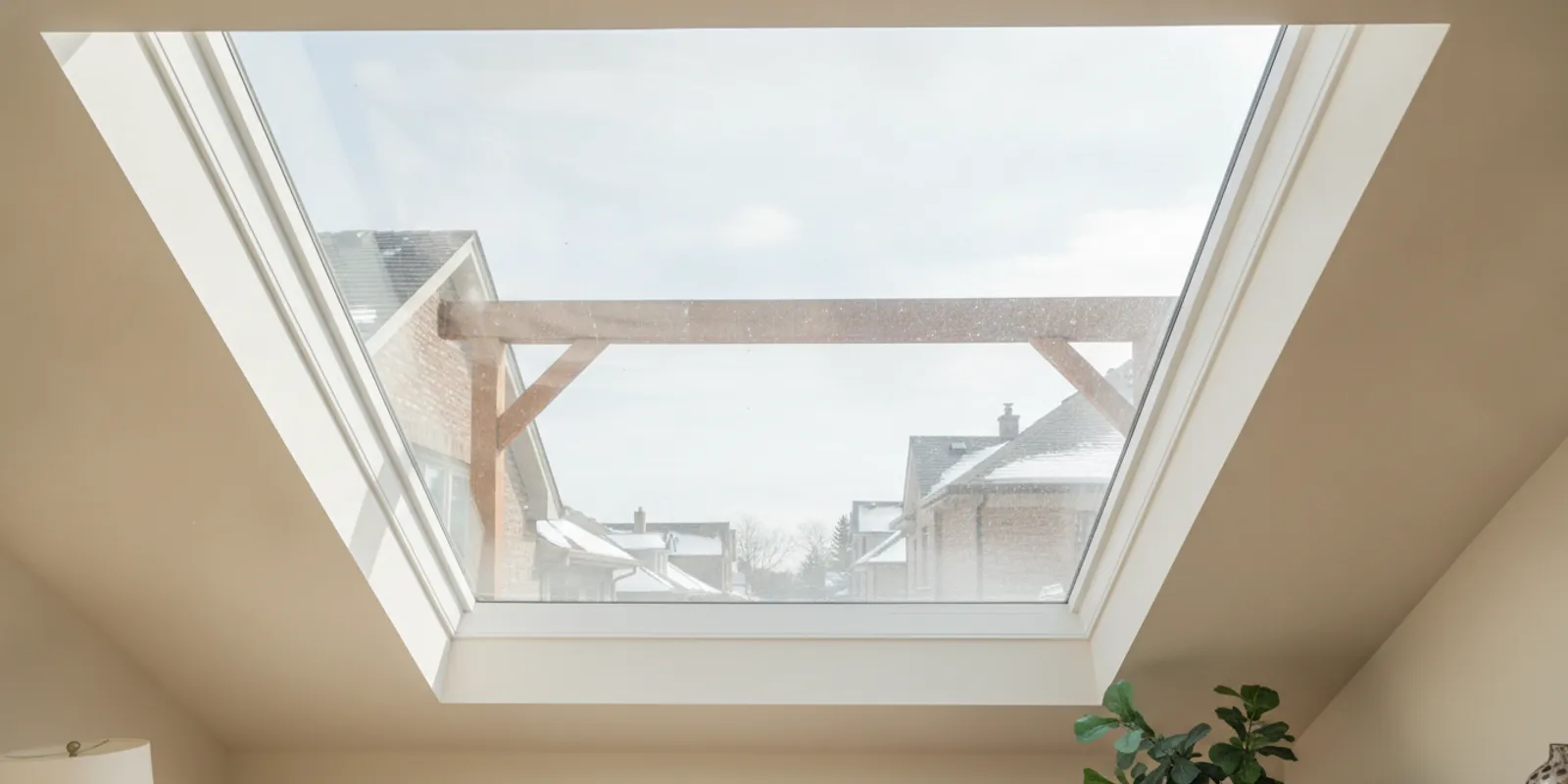
A skylight can bring welcome daylight into a Chicago home, but it can also create glare, unwanted solar heat, fading concerns, or a room that feels different from the rest of the house. Window film skylights Chicago homes may be a useful combination in some cases, but a skylight is not simply a vertical window mounted overhead. Its glass, construction, slope, access, and exposure all matter when choosing a film. A professional assessment helps determine whether film is appropriate and which type fits the goal.
Request a free estimate for your skylight
Can window film work on a skylight?
Sometimes. A suitable window film may help manage solar heat gain, glare, ultraviolet exposure, or privacy, depending on the product and the skylight. The important first step is to confirm that a specific film is compatible with the specific glazing and installation conditions. Film options do not all perform alike, and no film should be assumed to be right for every skylight.
Skylights can be flat or curved, fixed or venting, and built with different glass or plastic glazing. Their angle may expose them to stronger direct sunlight than a nearby wall window. They can also be more difficult to reach and inspect. These details can affect what products are suitable and how a professional installer can achieve a clean, durable result.
Film is an addition to existing glazing, not a replacement for a damaged or failing skylight. If you see cracks, fogging between panes, leaks, loose framing, or other signs of a problem, have the skylight condition addressed before considering film. Film is not a repair for a roof or glazing defect.
What skylight problem are you trying to solve?
Start with the room’s actual discomfort. A clear goal makes it easier to compare products and avoids selecting a film based on a single feature that may not address the main issue.
- Too much solar heat: Ask about a solar-control film selected for heat rejection and the skylight’s glazing. The effect depends on the product, the glass, the sun exposure, and the room; do not assume every film will produce the same result.
- Harsh brightness or glare: A solar-control option may reduce glare, but the visible-light transmission matters. Consider how much daylight the room needs and whether the skylight is the only meaningful source of natural light.
- UV exposure: Some window films are designed to block up to 99% of harmful UV rays. Confirm the specifications for the particular product, and remember that UV protection and solar heat control are related but different performance goals. Read more about how window film blocks UV rays.
- Privacy: Privacy film may be useful for certain glass applications, but a roof skylight often does not face the same sightline concerns as a wall window. Consider nearby elevated buildings, neighboring rooflines, and the room’s use before choosing a privacy effect. See the home privacy window film guide.
- Appearance: Decorative film can change the look of selected glazing, but an overhead application may call for a different visual choice than a bathroom or entry window. Explore decorative film options for a home before deciding whether that style suits the space.
If the main concern is a hot room, avoid choosing only by a film’s darkest appearance. A darker look does not, by itself, establish the product’s heat-control performance or its suitability for a particular skylight.
It can help to describe the discomfort in concrete terms. For example, note whether a reading chair becomes uncomfortable during afternoon sun, whether a screen is difficult to view beneath the skylight, or whether furnishings receive direct light for several hours. These observations do not identify the right product by themselves, but they give an estimator a clearer starting point than a general request for a darker skylight. If the room is bright but not hot, preserving visible daylight may matter more than maximizing a solar-control feature. If the central issue is heat, ask which product characteristics relate to solar heat gain control and how those characteristics apply to the existing glazing.
How is a skylight different from a regular window?
A skylight’s overhead position changes both the exposure and the installation conditions. Its angle, orientation, shading from trees or nearby structures, and surrounding roof design affect how sunlight reaches the glass. A south- or west-facing roof slope may receive a different pattern of direct sun than a shaded or north-facing one, but a site review is needed to understand the actual conditions.
The glazing itself is just as important. Skylights may use single or multiple panes, insulating glass, special coatings, or other assemblies. Some have plastic rather than glass. Applying a film changes how the glazing interacts with sunlight, so the film must be selected with the specific construction in mind. Professional review can help avoid choosing a film solely because it worked on a different window.
Access is another practical consideration. A high or steeply sloped skylight can require specialized access and careful preparation. Dust, condensation, and water exposure can also make a ceiling-level opening different to work on than a reachable wall window. A trained installer can evaluate the location and whether a professional installation can deliver the desired factory-finished look.
For background on how glazing materials and films are considered in solar and architectural applications, see the academic paper Glazing Materials for Solar and Architectural Applications. The paper discusses film materials and categories; it is not a product recommendation for any particular skylight.
Think about the full path from roof to room rather than judging the glass in isolation. A skylight may be partly shaded by a dormer, nearby trees, or roof features, and the room below may have light-colored surfaces that make daylight feel more intense. Furniture placement can also shape the complaint: a beam may fall directly on a desk or seating area at a particular hour. When you discuss the project, explain where people sit or work and when discomfort appears. That context helps compare the desired light level with the specific concern, instead of treating every skylight as if it has the same exposure.
Which film goal should guide your choice?
Different films solve different problems. Use the table as a starting point for a conversation, not as a substitute for checking the skylight manufacturer’s requirements or the product specifications.
| Primary goal | Film direction to discuss | Skylight-specific question | Trade-off to consider |
|---|---|---|---|
| Reduce solar heat gain | Solar-control film designed for the glazing | Is this product approved or suitable for this glass and its exposure? | Heat control, appearance, and daylight transmission must be balanced. |
| Reduce glare while preserving daylight | A film selected for its visible-light characteristics and solar performance | How will the light level change in this particular room? | Glare reduction can affect brightness and the view of the sky. |
| Limit UV exposure | Film with stated UV protection performance | What does the product documentation specify for this application? | UV performance alone does not determine heat rejection. |
| Change the glass appearance | Decorative or specialty film, if suitable for the glazing | Will the finish look right from inside and outside? | Appearance and light transmission vary by film. |
Ask the installer to explain the film category, the relevant specifications, how the film will affect visible light, and any limitations tied to the skylight. If a product’s compatibility is uncertain, get that clarified before scheduling installation.
For example, imagine a family room that feels bright and pleasant in the morning but develops a patch of uncomfortable glare late in the day. A recommendation should address that specific timing and the room’s need for daylight, not simply promise a darker appearance. In a stairwell with no nearby seating or screen, the homeowner may instead prioritize a consistent look or UV protection for finishes below. These are different use cases, even when the skylights look similar from the roof. Ask how the product recommendation reflects the room’s use, and whether another window is contributing to the same discomfort. If a proposal focuses on one benefit, ask what trade-off that benefit may bring, such as reduced visible light or a changed exterior appearance.
Keep the questions practical and documented. Ask for the exact product or film series under consideration, the applicable specifications, and any limits the manufacturer identifies for the glazing type or slope. If there is more than one option, compare them on the same points: intended benefit, daylight effect, appearance, compatibility, and warranty terms. A clear comparison makes it easier to decide whether a proposed film matches your priorities or whether the question needs further review.
What should Chicago homeowners check before choosing film?
Chicago-area homes experience changing sun angles and seasonal conditions. A skylight that feels comfortable in one season may feel too bright or warm during another. A useful assessment looks at more than the glass alone.
- Note when the problem occurs. Record the time of day, season, and weather when the room feels too hot or bright. Mention whether the issue is constant or limited to particular hours.
- Identify the skylight construction. If available, gather the manufacturer, model, age, glazing description, and any installation or warranty documents. Do not guess at the glass type.
- Check its condition. Tell the estimator about cracks, leaks, fogging, previous repairs, existing coatings, or existing film. A film assessment should not overlook a condition issue.
- Describe the room’s use. A bedroom, stairwell, kitchen, and work area may have different priorities for daylight, glare, privacy, and comfort.
- Discuss the preferred appearance. Explain whether you want to preserve a bright, clear view or are open to a noticeable change in tint or reflectivity.
- Confirm installation access. Share the ceiling height, roof pitch if known, and any obstacles beneath or around the skylight. The installer can determine what access and preparation are practical.
For general energy-efficiency context, the Utah State University publication Energy Efficient Windows notes that NFRC labels may also appear on skylights and doors, while cautioning that a label alone does not mean a window is energy efficient. Ask what documentation is available for your skylight and proposed film rather than drawing conclusions from a label alone.
A professional can also help distinguish between a film project and a glazing or roof concern. If the skylight needs repair or replacement, film should not be presented as a substitute. For residential applications beyond skylights, Sullivan’s also offers guidance on residential window film in Chicagoland and a room-by-room approach to choosing home window film.
A simple observation log can make an estimate more useful. For several days, jot down the time the room becomes uncomfortable, the weather as you experience it, whether blinds or shades are in use, and where the brightest area falls. You do not need specialized equipment or a formal measurement. The goal is to separate a recurring pattern from a one-time impression. A photo taken from the same spot at different times may also show how the light changes, provided it is safe and practical to take it. Share those notes along with any skylight documents; together, they can help clarify whether the main request is heat rejection, glare management, UV protection, or a combination.
Before the visit, also consider what a successful result would look like to you. Would you accept a visible tint if it helped with a specific discomfort, or is preserving a nearly clear view a priority? Do you want the room to stay bright for plants, reading, or general use? Are you trying to make the skylight visually consistent with nearby windows? Naming the acceptable and unacceptable changes helps prevent mismatched expectations and gives the recommendation a useful decision boundary.
What should a professional estimate cover?
A free estimate is an opportunity to describe the problem and establish whether a film option is appropriate. Sullivan’s Tinting is family-owned and operated and provides personalized recommendations; the right recommendation depends on the project details rather than a one-size-fits-all selection.
For a skylight estimate, prepare to discuss:
- The number, approximate size, location, and accessibility of the skylights.
- The issue you want to address, such as heat, glare, UV exposure, or appearance.
- Any available information about the glazing, existing coatings, or skylight manufacturer.
- Whether the glass has visible damage, condensation, leaks, or a previous film application.
- Your preference for daylight, view, and interior appearance after film is applied.
- Any timing or access considerations, such as vaulted ceilings or furnishings below the glass.
Ask what film types are being considered and why, what the product specifications mean for your goal, whether the film is appropriate for the skylight, and what warranty applies. Most film products have manufacturer-backed warranties, but coverage depends on the product and application; ask for the specific terms rather than assuming every project has identical coverage. You can also review how long window film may last and warranty considerations, and why professional film installation matters.
Window film pricing is custom, not a fixed amount per skylight. Measurements, film type, glazing conditions, access, project complexity, and location can all affect the estimate. A clear estimate should identify the proposed work and product rather than promise a result without considering the site.
It is reasonable to ask how the installer will verify compatibility if you do not know the glass type. Share clear photos of the skylight from inside, including the frame and any visible markings, and provide the model information if you can find it safely. Do not climb onto a roof or reach over a stairwell to collect details. Let the professional determine whether more inspection is needed. If the information is incomplete, ask whether a recommendation is preliminary or final and what remains to be confirmed before work is scheduled.
Clarify what the estimate includes in plain language: which skylight surfaces are included, the film being proposed, the expected change in appearance or light, preparation and access considerations, and the warranty terms. If several skylights are involved, ask whether each has been evaluated separately. A group of openings may look alike but differ in size, orientation, glazing, or condition. Confirm any exclusions as well, so repair work or a separate glazing issue is not confused with the film scope.
Because pricing is custom, compare written scopes rather than judging an estimate by a single total. Check that each proposal refers to the same openings and intended outcome, then note differences in film type, access plan, compatibility review, and warranty. If the proposals do not describe the same work, ask for clarification before treating them as directly comparable. The purpose of the estimate is to give you a clear basis for deciding, not to force a choice before the skylight and your priorities are understood.
How can you compare recommendations with confidence?
A useful recommendation connects the product to your stated problem. If glare is the main complaint, ask how the proposed film affects visible light as well as solar heat gain. If the goal is UV protection, ask for the product’s documented UV performance and whether another concern, such as excess heat, calls for a separate specification. The answer should explain trade-offs, not simply describe one product as the darkest or strongest.
It also helps to clarify what the estimate does not include. Confirm whether the scope covers the skylight only or any nearby vertical windows, how the installer plans to access the glass, and whether there are conditions that would delay or rule out the work. If access is difficult or the skylight’s construction cannot be identified, ask what additional information is needed before a final recommendation.
Consider the room as a whole. A skylight may be one of several sources of heat or glare, and film on overhead glass may not address sunlight entering through nearby windows. Think about when you use the room, where you sit or work, and whether you want a consistent appearance across multiple panes. Sullivan’s offers residential options for more than one goal, including residential films for heat reduction and home window film and energy efficiency; the specific application still needs individual review.
Finally, compare recommendations using the same priorities. A short list can help: desired heat and glare reduction, acceptable change in daylight, appearance from indoors, skylight compatibility, access plan, and applicable warranty. Ask the installer to explain where each option meets or does not meet those priorities. This keeps the decision focused on your skylight and room, rather than a general claim made for different glass or a different building.
A practical way to weigh two recommendations is to write down the main goal first, then score each option against your own requirements: compatibility evidence, daylight preference, interior and exterior appearance, and the terms of coverage. You do not need to turn the decision into a complicated technical exercise. The point is to make sure the film is being considered for the actual glazing and that the expected change matters to the people who use the room. If one recommendation cannot explain how it addresses the stated issue, ask follow-up questions before moving ahead.
Also distinguish the result you hope for from a guarantee of a particular room temperature or utility outcome. A film can be selected for its performance characteristics, but the room’s comfort also depends on its construction, other windows, shading, ventilation, and how it is used. Ask for a clear description of what the film is designed to do and what it cannot address. That conversation is especially useful when the discomfort may have more than one cause.
Get a no-obligation free estimate
Frequently Asked Questions
Can any window film be installed on a skylight?
No. Film suitability depends on the skylight’s glazing, construction, condition, exposure, and the product specifications. Have a professional assess the specific application before selecting a film.
Will film make a skylight too dark?
It can change the amount and character of daylight, depending on the film. Ask about visible-light transmission and compare the desired reduction in glare or heat with how bright you want the room to remain.
Does skylight film fix leaks or condensation?
No. Film is not a repair for a roof leak, failed seal, damaged pane, or moisture trapped between panes. Address those conditions with an appropriate roofing or glazing professional before considering film.
Can window film reduce skylight heat?
A suitable solar-control film may help manage solar heat gain, but results depend on the specific film, skylight glazing, sun exposure, and room. A site-specific recommendation is more useful than assuming all films perform the same way.
How do I know whether my skylight is compatible?
Share the skylight model or glazing information if available, along with photos and a description of its condition and exposure. An installer can review the details and advise whether a particular film is appropriate.
Ready to explore window film for your skylight?
Skylight film decisions begin with the goal, but they should end with a compatibility check for the actual glass and installation conditions. A professional assessment can help you weigh heat rejection, glare, UV protection, daylight, appearance, and access before moving forward.
Request your free estimate for a skylight film assessment
With the right information and a product selected for the application, you can make a more informed decision about comfort and daylight in your Chicago home.