
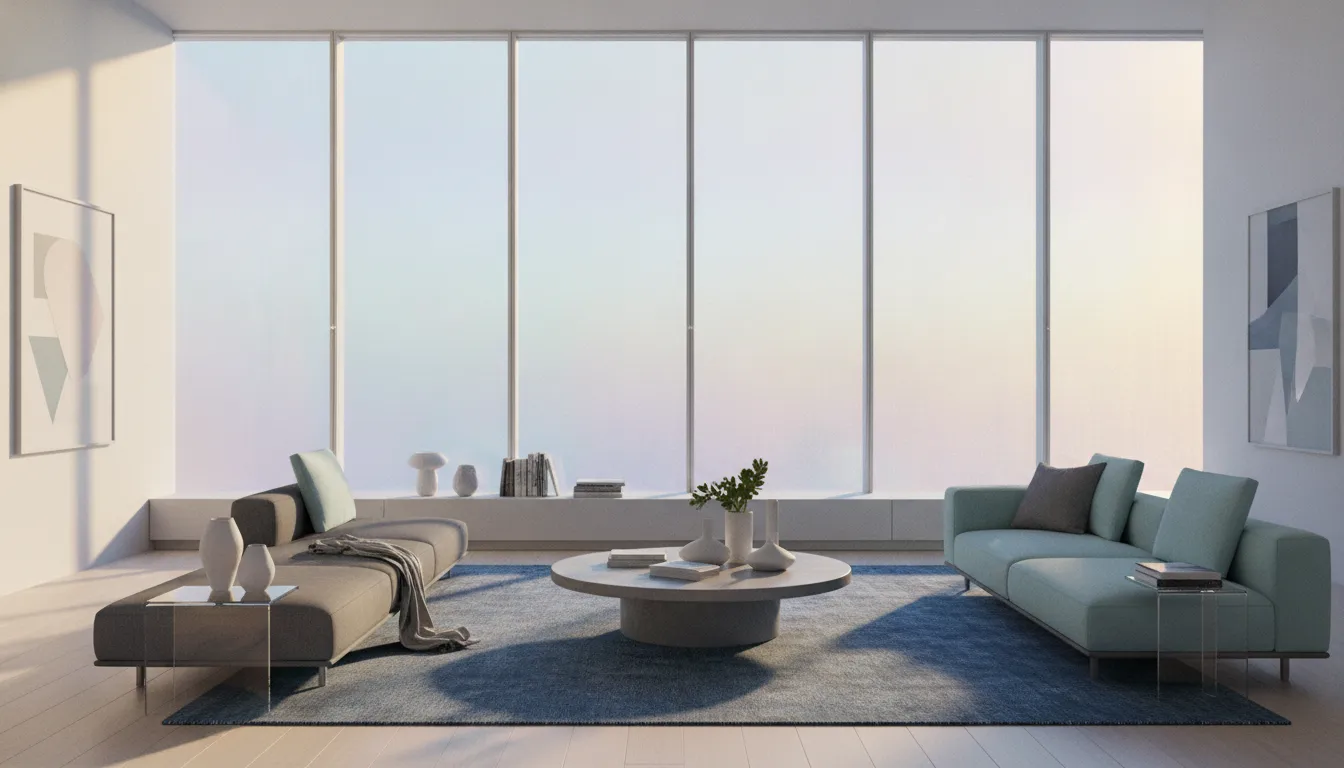
Chicago homes rarely have the same window challenge in every room. A west-facing living room may become uncomfortably hot by late afternoon, while a bathroom or street-facing bedroom may need more privacy without giving up daylight. Treating every window with the same film can leave important needs unresolved.
Schedule a free in-home estimate to get expert recommendations matched to each room in your home.
The best way to understand how to choose window film for home is to match the film category to each room’s function, sun exposure, glare, and privacy needs. Solar control films can reduce indoor temperatures by up to 30-50% in sun-exposed rooms and minimize glare. While many quality films block up to 99% of harmful UV rays.
That room-by-room approach also helps protect furnishings, improve comfort, and preserve the home’s natural light. For a broader foundation, review this complete homeowner’s guide to window film. That guide explains how orientation, daily use, and glass type change the right recommendation from one space to the next.
Why the Right Film Depends on the Room, Not Just the House
To choose window film for home effectively, evaluate each room’s sun exposure, function, and glass type separately. South- and west-facing rooms typically need solar control; bathrooms need privacy film; home offices need glare reduction; and bedrooms need a balance of comfort and privacy.
A south-facing living room and a north-facing bathroom may be in the same house, but their windows solve very different problems. One may need solar heat gain control and glare reduction, while the other may need privacy without sacrificing daylight. The most practical approach is to evaluate each room’s exposure, function, and glass before selecting a film.
- South- and west-facing windows get the most direct sun. Solar control or ceramic film helps manage heat and glare.
- North-facing windows receive less direct solar heat. Privacy, appearance, or UV protection often takes priority.
- Street-level and bathroom windows need privacy solutions like frosted, decorative, or one-way film.
- Entry doors with glass panels may benefit from safety and security film for added break-in resistance.
Consider what you want the window to do before choosing a shade or appearance. A living room may benefit from solar control to make reading, relaxing, or watching television more comfortable. A bathroom or street-facing entry may call for decorative or privacy film that limits views while preserving natural light. These categories are not interchangeable, and professional recommendations should reflect how the room is used. Professional installation helps achieve consistent coverage and a factory-finished look across different window types.
Film selection also depends on the window itself. Single-pane, double-pane, tempered, and laminated glass can respond differently to heat and installation materials. Residential window film is compatible with many common glass types, but the exact construction, thickness, seal condition, and manufacturer guidance still matter.
| Room | Primary Concern | Recommended Film | Key Benefit |
|---|---|---|---|
| Living room (west-facing) | Afternoon heat, glare, UV | Solar control or ceramic | Reduces indoor temps 30-50% |
| Bathroom | Daytime privacy, natural light | Frosted or decorative | Obscures view, preserves daylight |
| Home office | Screen glare, heat | Glare-reduction solar film | Softens reflections, cools the room |
| Bedroom | Privacy, comfort, sleep | Dual-reflective or ceramic | Daytime privacy plus heat control |
| Entry door | Privacy, security | Safety/security or decorative | Break-in resistance plus visual privacy |
For a deeper look at how film categories compare, see our guide to the best residential window films for heat reduction.
What Window Film Works Best for West-Facing Living Rooms?
Solar control film is the primary recommendation for west-facing living rooms. It reduces indoor temperatures by 30-50% in sun-exposed rooms, blocks up to 99% of UV rays, and minimizes screen glare while preserving natural light.
West-facing windows can make a living room or family room uncomfortable when afternoon sun reaches its strongest point. The right film should address that exposure without turning the room into a dark space. For most households, that means starting with solar control and then choosing the construction that best fits the glass, view, and desired appearance.
Reduce Afternoon Heat
Solar control film is designed to manage solar heat gain before it overwhelms the room. In sun-exposed spaces, these films can reduce indoor temperatures by 30% to 50%, according to published industry guidance, helping the room feel more balanced during bright afternoon hours. The result is especially useful in family rooms where windows, seating, and televisions all share the same space.
Several approaches to solar control are available:
- Traditional solar control films offer a practical balance of heat rejection and visible light transmission.
- Ceramic films provide strong solar performance with a more neutral, factory-finished look that does not appear dark or reflective.
- Reflective films reject significant solar energy and may be appropriate when their exterior appearance and privacy characteristics fit the home.
A professional installer can help compare those options rather than treating every window as a one-film solution.
Protect Furniture and Flooring from UV Exposure
Sunlight affects more than room temperature. Repeated UV exposure can contribute to fading in upholstered furniture, hardwood floors, area rugs, and artwork. Many high-quality residential films are engineered to block up to 99% of harmful UV rays, helping homeowners protect the interiors they have already invested in. This does not make furnishings completely fade-proof, since visible light and other environmental factors still matter, but it adds an important layer of protection. Learn more about how window film blocks UV rays.
Control Glare While Watching TV
Glare can make a television difficult to watch and encourage people to close blinds during the brightest part of the day. Solar control films can minimize glare while preserving useful natural light, so the room remains open and comfortable. The best selection depends on the window orientation, screen placement, glass type, and how much exterior reflection is acceptable.
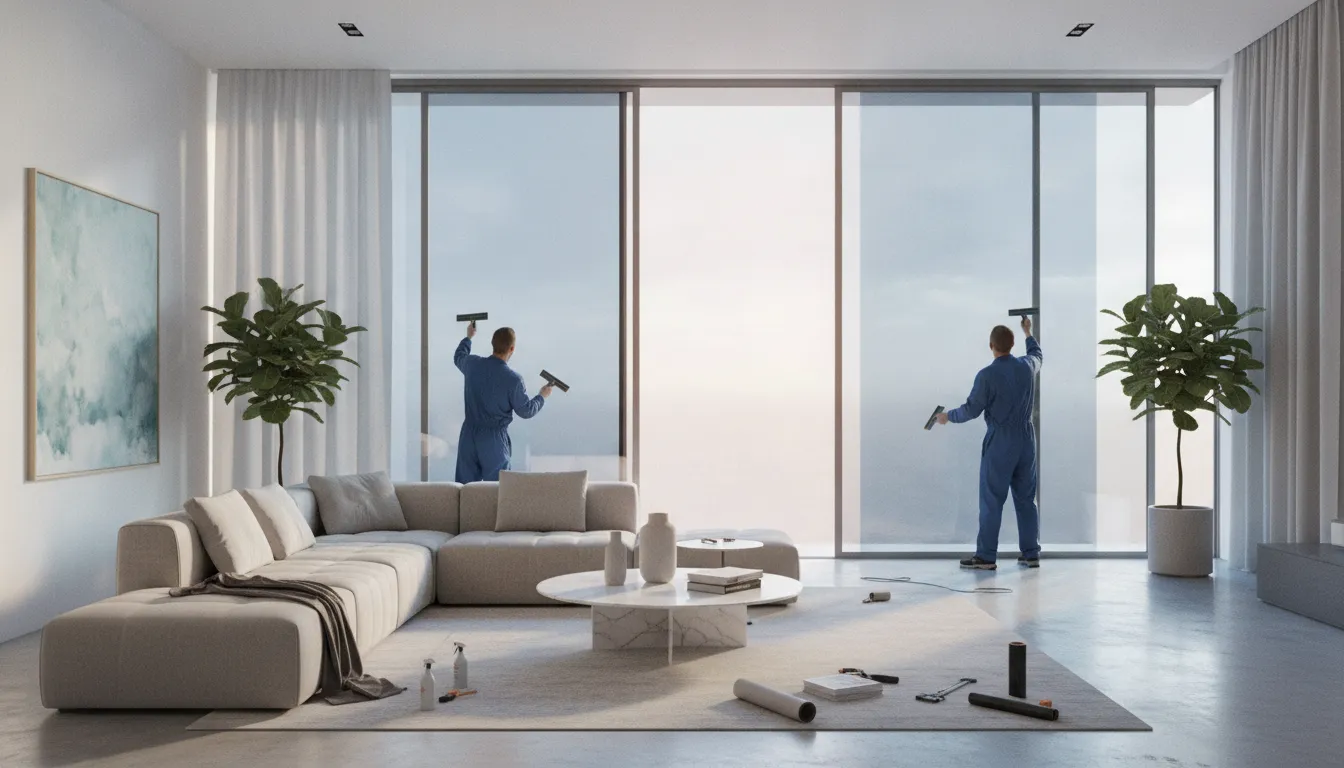
Which Privacy Film Is Best for Bathrooms and Entry Doors?
Frosted and decorative privacy films are the best choices for bathroom windows, while safety/security film is recommended for glass entry doors and sidelites. Both options preserve natural light while addressing privacy and security concerns.
Bathrooms and entry doors often need privacy for different reasons. A bathroom window may face a neighboring property or a walkway. While a glass entry door can expose the foyer and create a vulnerable point at the front of the home. The right film can address both concerns while preserving daylight and a clean appearance.
Frosted and Decorative Film for Bathrooms
Frosted film is a practical choice when you want consistent privacy throughout the day. It diffuses the view through the glass without making the room feel closed in, so natural light can still enter. That makes it well suited to bathroom windows near showers, tubs, or street-facing walls.
Decorative film offers the same basic privacy function with more design flexibility. Patterns, textures, and partial applications can obscure the lower portion of a window while leaving the upper glass open to the sky. This approach works well when you want privacy without covering the entire pane. Learn more about privacy window film for homes.
When One-Way Privacy Film Makes Sense
One-way privacy film can create a more private appearance from the brighter side of the glass while maintaining a view from the darker side. It is most effective when the light balance supports the reflective effect, so it should not be treated as a permanent privacy solution for every situation. See our guide to one-way privacy window film for a detailed explanation.
Security Film for Entry Doors
Entry doors with large glass panels or sidelites may benefit from safety and security film rather than a decorative privacy product alone. This thicker film helps hold glass together when it is struck, adding a layer of break-in resistance and reducing the chance that shattered pieces will separate immediately. It does not replace a strong lock, reinforced door, or other security measures, but it can strengthen an important part of the entry system. For a complete overview, read our guide to safety window film for home.
How Do You Reduce Glare in a Home Office Without Losing Natural Light?
Glare-reduction window film keeps home offices bright and comfortable by managing harsh reflected light without darkening the glass. Combined with solar control properties, it reduces screen reflections and helps maintain a steady workspace temperature.
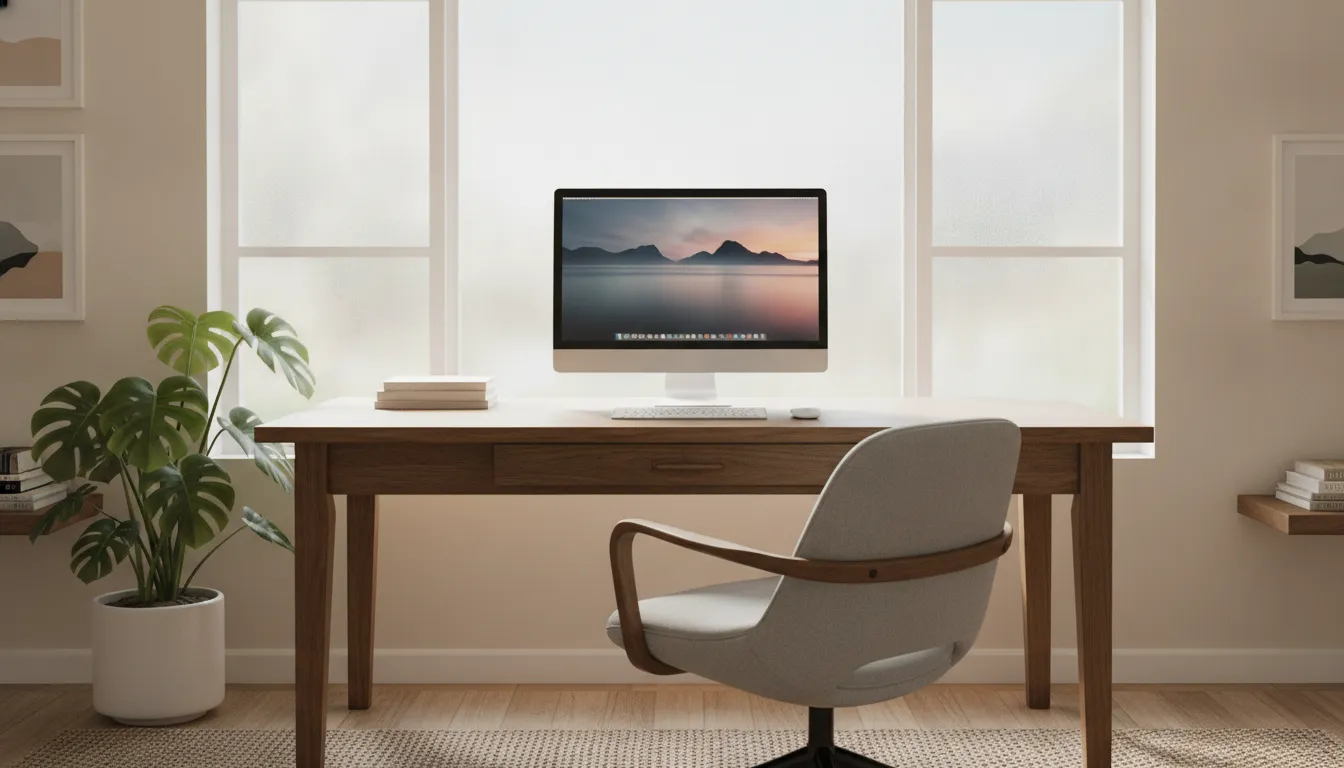
A productive home office needs comfortable, consistent light. Direct sun across a monitor can create distracting reflections, make text harder to read, and encourage you to close the blinds for much of the day. That tradeoff reduces the natural light that makes a workspace feel open. The right window film can address glare while keeping the room bright and connected to the outdoors.
Reduce Screen Glare Without Darkening the Room
Glare-reduction window film for home offices is designed to manage intense reflected light without turning the glass into a visibly dark barrier. This is especially useful for desks near south- or west-facing windows, where changing sun angles can affect the screen throughout the workday.
- Preserves natural light while softening harsh contrast between bright windows and computer displays.
- Keeps blinds open more often, maintaining a comfortable view while working.
- Adapts to changing sun angles throughout the day, unlike static window coverings.
For more detail on selecting a film for this setting, see our guide to glare reduction window film for home offices.
Manage Heat Around Equipment and Your Workspace
Sunlight can make a home office uncomfortable well before the rest of the house feels warm. Heat entering through the glass can raise the temperature around a desk, monitor, printer, or other equipment. Solar control film helps manage solar heat gain at the window. Which can make it easier to maintain a steady workspace temperature and reduce the demand placed on your HVAC system.
In sun-exposed rooms, solar control films can reduce indoor temperatures by approximately 30% to 50%, according to industry guidance. Actual results depend on the window, room, exposure, existing insulation, and HVAC system, so this figure should be treated as a general reference rather than a guarantee.
Bedrooms: Balancing Privacy and Comfort
For bedrooms, dual-reflective film offers excellent daytime privacy while ceramic film provides heat rejection with a neutral appearance. Both options block up to 99% of UV rays to protect bedding and flooring.
A bedroom window has to do more than soften sunlight. It should support restful sleep, protect personal space, and preserve the natural light that keeps the room comfortable during the day. The best selection depends on whether your priority is daytime privacy, solar heat control, or a more neutral appearance.
Dual-Reflective vs. Ceramic Films
- Dual-reflective film provides daytime privacy with a reflective exterior that makes it harder to see into the room during daylight while still allowing natural light indoors. At night, interior lights can reverse the balance, so bedrooms needing around-the-clock privacy may need curtains or shades as well.
- Ceramic film delivers heat rejection without noticeably changing the appearance of the glass. It maintains a clearer, factory-finished look than some highly reflective products.
UV Protection for Bedding and Flooring
Daylight can gradually fade bedding, rugs, hardwood floors, and upholstered furniture, especially near large or south-facing windows. Many high-quality residential window films are engineered to block up to 99% of harmful UV rays, helping protect furnishings while maintaining the view and natural light. Learn more about UV protection from window film.
That protection is one part of a broader room-by-room plan. A bedroom with strong afternoon sun may benefit from solar control, while a shaded room may need little heat management but still benefit from UV filtering. A Sullivan’s Tinting professional can review your glass, exposure patterns, and privacy goals. For more on the energy benefits, read about home window film energy savings.
How a Free Estimate Helps You Match Film to Your Needs
A free in-home estimate from Sullivan’s Tinting evaluates each window’s orientation, glass type, and function to match the right film category to each room. This consultative approach has served Chicagoland homeowners since 1988.
Once you understand what each room needs, the next step is having those needs evaluated in the context of your home. A professional assessment looks at more than the appearance of the glass. It considers the size and placement of each window, the type of glass, the direction it faces, and how sunlight moves through the room during the day.
Every Window Has a Different Job
- West-facing living room windows typically need solar control for afternoon heat and glare management.
- Bedrooms require a different balance of privacy, comfort, and natural light.
- Entry doors and sidelites may need decorative or safety-focused film.
Glass type is another important consideration. Residential window film is compatible with most common glass types, including single-pane, double-pane, tempered. And laminated glass, but the right recommendation depends on the specific window and film application. Accurate measurements also help ensure a clean, factory-finished look after professional installation. Learn more about how window film affects light levels and what to expect.
A Consultation Turns Priorities into a Plan
During a free in-home estimate, a trained installer can review your priorities room by room. You may be most concerned about heat in one space, privacy in another, or protecting furnishings from UV exposure throughout the home. Many films block up to 99% of harmful UV rays, but the best choice still depends on the result you want and the conditions each window experiences.
Sullivan’s Window Tinting has served Chicagoland since 1988. Our family-owned team uses a consultative process to recommend window film based on your home, your glass, and your goals, rather than pushing a one-size-fits-all solution. Request a free estimate to turn your research into a clear plan for your windows.
Frequently Asked Questions
What factors should I consider when selecting home window film?
Start with the room’s main problem, such as afternoon heat, screen glare, fading, privacy, or security. Then consider the window’s direction, glass type, desired level of natural light, and whether the room needs daytime or nighttime privacy. A room-by-room assessment usually produces a better result than choosing one film for every window.
What are the different types of residential window film?
Common options include solar control films for heat and glare, ceramic films for strong performance with a less reflective appearance. Decorative or frosted films for privacy, and safety or security films for added glass protection. The right category depends on the window’s function and your priorities, not simply on how dark the film looks.
Should I choose darker film for better privacy?
Not necessarily. Darker film can improve daytime privacy, but it may also reduce incoming light and does not automatically provide privacy after dark when interior lights are on. Frosted, decorative, or specialty privacy films may better suit bathrooms, entry doors, or rooms where you want privacy without sacrificing daylight. Our decorative window film ideas guide explores the options available.
Can I install window film myself?
Professional installation is the safer choice for a clean, factory-finished look and proper film-to-glass matching. An installer can account for window measurements, glass construction, exposure, and manufacturer requirements while helping preserve warranty coverage. This is especially important for larger panes, specialty glass, and safety or security applications.
How do I know if film is compatible with my home’s glass?
Have the glass evaluated before selecting a film. Double-pane units, coated glass, specialty glazing, and unusual window configurations can have different compatibility requirements. A professional assessment helps reduce the risk of thermal stress and identifies a film that fits the window, the room, and your comfort goals.
Schedule Your Free In-Home Window Film Estimate
The right film depends on each room’s light, comfort, privacy, and glass needs. A professional consultation can help you compare practical options for your Chicago home. Call Sullivan’s Tinting at (847) 516-3951 to schedule your free in-home window film estimate or book online.