
.
For a Chicago business, window film ROI is a building-specific business case, not a universal percentage printed on a brochure. The right evaluation connects the installation investment with measurable operating benefits, including solar heat gain control, HVAC demand, interior asset protection, and occupant comfort.
Request a free commercial window film estimate
The most defensible window film roi business chicago analysis starts with window area, glass type, orientation, HVAC load, operating schedule, and selected film. It compares expected annual benefits with the complete project investment, without promising a fixed savings amount or payback period.
That framework helps owners and property managers compare commercial window film with other building improvements. It also captures benefits that may not appear immediately on an energy bill, such as reduced glare, lower fading pressure, and a more comfortable workspace.
For the broader commercial application, review Sullivan’s guide to commercial window film for Chicago businesses. The steps below show how to build a practical evaluation before requesting a proposal.
How to Calculate Window Film ROI for a Chicago Business
Calculate commercial window film ROI by documenting the building baseline, assigning measurable value to expected benefits, and comparing conservative scenarios against the total installed investment. Keep energy savings, interior protection, comfort, and project disruption separate so the final decision remains transparent.
Start with the conditions that influence performance. A large west-facing office with afternoon glare has a different opportunity from a shaded building with limited glass. A retail store, medical office, and warehouse also operate on different schedules.
Use these formulas as planning tools:
- Annual net benefit = annual operating and asset-protection benefits minus annual film-related costs.
- Simple ROI = annual net benefit divided by total installed investment, multiplied by 100.
- Simple payback = total installed investment divided by annual net benefit.
These formulas organize the decision. They do not create a guaranteed result. Film category, glass type, window area, orientation, HVAC condition, and installation scope can change the outcome.
- Collect at least twelve months of utility information when it is available.
- Measure the approximate glass area and identify the most exposed elevations.
- Record operating hours, thermostat schedules, and recurring comfort complaints.
- Note glare on monitors, displays, workstations, and customer-facing areas.
- Document fading, refinishing, replacement, or maintenance concerns involving interior assets.
- Separate solar-control, decorative/privacy, and safety/security objectives.
- Request a proposal that identifies film type, treated areas, assumptions, and warranty terms.
- Compare conservative, expected, and stronger-performance scenarios instead of one optimistic forecast.
- Track the same utility, comfort, maintenance, and asset indicators after installation.
The U.S. Environmental Protection Agency identifies energy use as a significant cost category in commercial office buildings and lists window films among measures that can reduce energy consumption. Review the EPA source for context, then apply the model to the specific building.
Which Building Inputs Affect Commercial Window Film ROI?
Window orientation, glazing, exposed glass area, HVAC load, operating schedule, shading, and film selection are the main inputs affecting commercial window film ROI. Recording these variables prevents a generic savings claim from being mistaken for a property-specific forecast.
Orientation changes when sunlight enters the space. East-facing glass can create morning heat and glare. West-facing glass often produces a difficult late-day condition. South-facing windows may receive substantial exposure across seasons, depending on exterior shading and nearby buildings.
Glazing matters as well. Single-pane, insulated, tinted, low-emissivity, and high-performance glass do not respond identically to a film installation. Window frames, seals, exterior overhangs, and the ratio of glass to wall area can also affect the opportunity.

HVAC conditions should be part of the baseline. If equipment runs near capacity on sunny afternoons, targeted solar heat gain control may support more consistent comfort. If the system has substantial unused capacity, the operational effect may be less visible.
Operating schedule changes the calculation. A weekday office, a retail space open evenings, and a facility with extended hours overlap sunlight and HVAC demand differently. Chicago’s cold winters and warm summers make year-round evaluation important.
Film selection should match the objective. Solar-control film addresses heat and glare. Decorative or privacy film manages views and appearance. Safety and security film addresses glass-retention goals. These categories should not be treated as interchangeable.
DOE-affiliated Building America guidance describes high-performance window film as an option that can combine solar heat rejection with low-emissivity performance while limiting unnecessary loss of visible light. Read the Building America resource for additional building-envelope context.
Can HVAC Savings Make Window Film Worth the Investment?
HVAC savings can contribute to a commercial window film payback when exposed glass creates meaningful solar heat gain and cooling demand. The potential depends on the building’s orientation, glazing, mechanical system, operating schedule, existing shading, and selected film, so savings should be modeled rather than assumed.
Solar-control film can reduce the amount of solar energy passing through selected windows. That may reduce cooling demand during bright periods. The effect is strongest where sunlight, occupancy, and HVAC operation overlap.
Look for patterns in utility data and occupant feedback. Compare summer electricity use with sunny periods, note rooms where blinds stay closed, and record complaints about hot workstations or monitor glare. These observations help identify where the project may deliver practical value.
Do not attribute every energy issue to the windows. Controls, air leakage, insulation, equipment age, and maintenance can also affect utility use. A responsible model identifies those factors rather than claiming film will solve them all.
When comparing proposals, ask how the installer selected the treated areas. A focused first phase may make sense when a few elevations create most of the problem. A broader project may be appropriate when glass exposure is widespread. The scope should follow the building’s evidence.
Include winter conditions in the discussion. A film chosen for strong summer heat rejection may have different optical or insulating characteristics from a high-performance option. The appropriate balance depends on the glass and the owner’s goals.
A custom estimate should explain the proposed film category, treated windows, installation conditions, warranty coverage, and assumptions behind any projected benefit. Sullivan’s commercial window film cost guide explains why measurements and project conditions matter more than a generic published rate.
See what your Chicago building may qualify for with a free estimate
How Do UV Protection and Fading Prevention Add to ROI?
UV protection can support commercial window film ROI by reducing exposure that contributes to fading and deterioration of furnishings, flooring, displays, merchandise, and other interior finishes. The financial value depends on the affected assets, replacement cycle, exposure, and film category.
An energy bill captures only part of a window improvement’s value. A business may also be managing fading in flooring, wood finishes, upholstered furniture, product displays, artwork, or merchandise. The damage may develop gradually, making it easy to overlook in a monthly operating review.
For Sullivan’s standard service context, window film is specified to block 99% of harmful UV rays. This is not a universal promise for every film. Product performance, glass, exposure, installation, and film category all matter.
- Furnishings and finishes: Track rooms where carpets, wood surfaces, upholstery, or other visible materials show fading pressure.
- Retail displays and merchandise: Record products or graphics exposed to direct sunlight and note replacement or presentation concerns.
- Maintenance planning: Compare refinishing and replacement decisions with the expected service life of the protected materials.
Assign a cautious value to these benefits. If an asset would not otherwise be replaced, do not count its full replacement cost as annual savings. Instead, describe the avoided risk, appearance benefit, or extended service expectation separately.
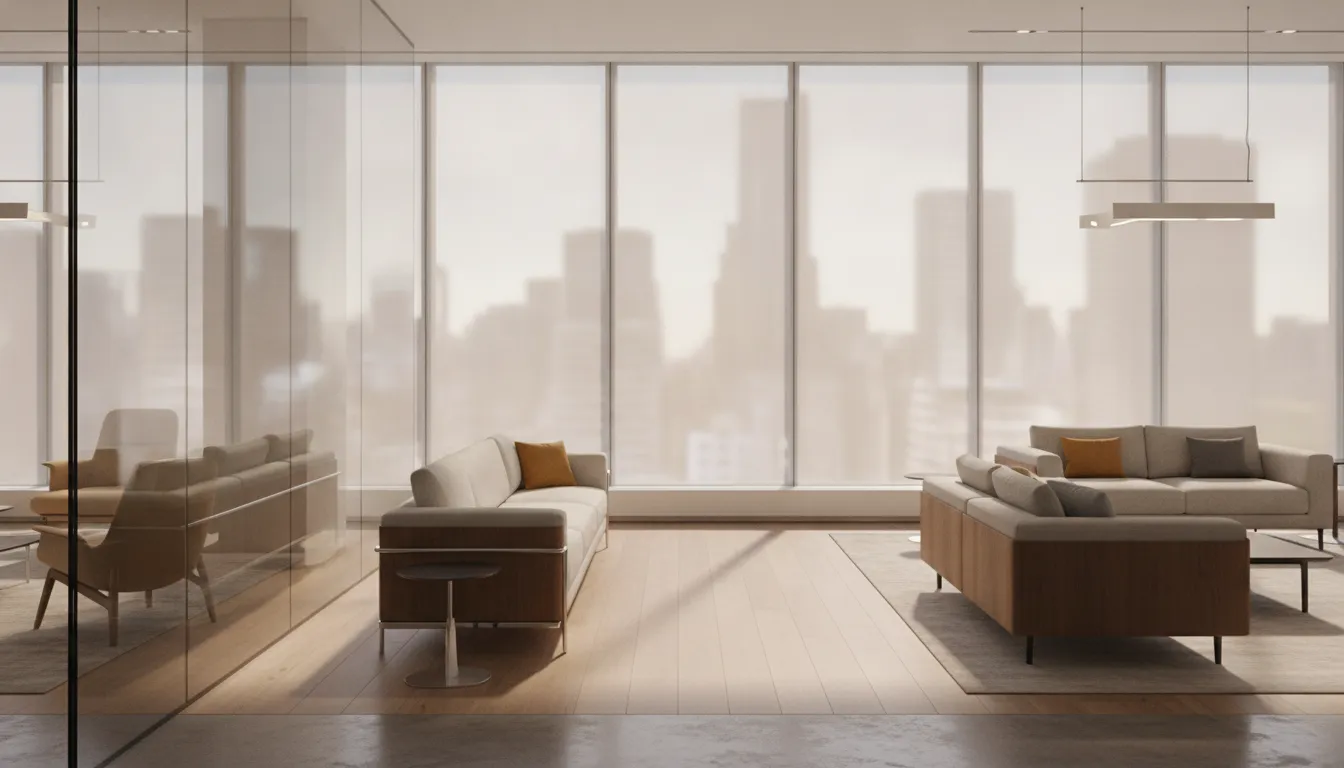
Review Sullivan’s information about commercial window film applications alongside the building’s asset list. A professional recommendation should balance UV protection, visible light, appearance, privacy, and the factory-finished look expected by customers and employees.
What Is a Realistic Payback Period for a Chicago Business?
There is no responsible universal payback period for a Chicago commercial window film project. Calculate the period by dividing the complete installed investment by a conservative annual benefit estimate, then test how the result changes with different energy, asset-protection, and operating assumptions.
The simple payback formula is useful:
Payback period = total installed investment divided by annual benefit
The investment should include the complete professional project. Account for film, preparation, access, treated areas, installation conditions, and any business-hours constraints. A low initial estimate can be misleading if it excludes necessary scope.
The annual benefit can include a measured change in cooling demand, but it may also include reduced fading pressure. Fewer maintenance concerns, improved comfort, and disruption avoided compared with a larger replacement project. Keep each category visible.
Use sensitivity analysis rather than a single forecast. A conservative case may assume smaller energy effects and no immediate replacement avoidance. An expected case can use documented utility and maintenance patterns. A stronger-performance case can show what would need to be true for the project to outperform the base estimate.
| Model input | What to document | Why it matters |
|---|---|---|
| Solar exposure. | Orientation and shading. | Shows when heat and glare enter the space. |
| Building systems. | HVAC load and schedule. | Connects windows with operating demand. |
| Interior assets. | Fading and replacement concerns. | Separates protection value from energy value. |
| Project scope. | Film, measurements, access, warranty. | Defines the investment denominator. |
| Success measures. | Utility use, complaints, and upkeep. | Creates a post-installation comparison. |
Compared with full window replacement, professionally installed film may address selected performance or privacy concerns with less demolition and disruption when existing glazing remains suitable. It is not a substitute for defective or structurally unsuitable windows.
For an additional comparison, review Sullivan’s guide to window film versus window replacement. The correct choice depends on the building condition, project objective, and complete scope.
Which Other Business Benefits Belong in the ROI Model?
A complete business case can include glare reduction, occupant comfort, privacy, security planning, appearance, and disruption avoided. These benefits may not belong in a utility calculation, but they can influence productivity, usability, maintenance planning, and the value of the workspace.
Glare and workspace comfort
Sunlight can make monitors, displays, workstations, and meeting areas difficult to use. Solar-control film may moderate harsh light while preserving useful daylight. Record where blinds remain closed and which rooms generate recurring complaints.
Privacy and security objectives
Privacy film can manage sightlines in conference rooms, reception areas, and street-facing spaces. Safety and security film serves a different purpose. It should be evaluated against the building’s risks, glass conditions, and broader facilities plan.
Sullivan’s resource on commercial security window film can help frame that discussion. Do not count privacy or security as automatic results from a solar-control product.
Appearance and operational disruption
Professional installation can improve the consistency of a building’s glass appearance. A clean, factory-finished look matters in customer-facing spaces. Project scheduling also matters when access, noise, or temporary relocation could affect operations.
Include those factors as qualified operational benefits. Assign a dollar value only when the business can support the assumption. Otherwise, document them as decision criteria alongside the financial model.
Request a building-specific free estimate from Sullivan’s Tinting
Frequently Asked Questions
What is the ROI of commercial window film?
Commercial window film ROI compares the complete installed investment with expected annual benefits. Benefits may include cooling-demand changes, reduced fading pressure, comfort, glare management, and disruption avoided. Because buildings differ, a site-specific model is more useful than a universal percentage.
Can window film lower energy costs for a Chicago business?
It can help control solar heat gain and cooling demand where exposed glass contributes to the load. Actual results depend on orientation, glazing, HVAC systems, shading, operating hours, and film selection. The EPA lists window films among commercial energy-efficiency measures, but does not make a universal savings promise.
How long does commercial window film take to pay for itself?
There is no single timeline that applies to every property. Divide the total installed investment by a conservative annual benefit estimate, then test the result under different assumptions. A professional proposal should show what conditions support the estimate.
What should a Chicago business measure before installation?
Record utility use, HVAC runtime when available, window orientation, glass area, operating hours, glare, comfort complaints, fading, maintenance, and replacement concerns. These baseline measures create a fair comparison after professional installation.
Does every commercial window film provide the same benefit?
No. Solar-control, decorative/privacy, and safety/security films serve different objectives. Optical performance and suitability depend on the glass, exposure, and project requirements. A professional recommendation should match the film category to the building’s actual needs.