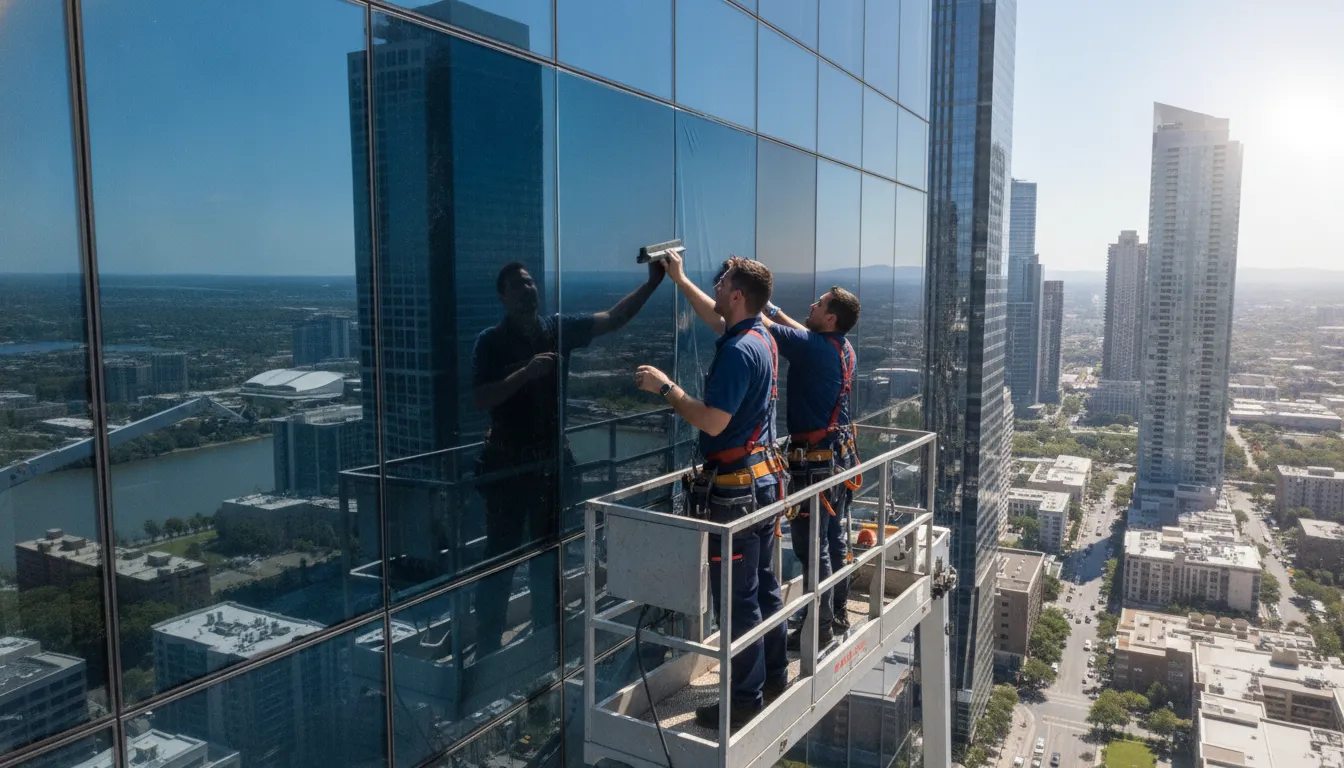
When a commercial building has distracting glare, uncomfortable rooms, fading interiors, or rising cooling demands, the installer you choose matters as much as the film itself. A professional assessment should account for the glass, building use, sun exposure, privacy goals, and long-term maintenance rather than treating every window the same.
When comparing commercial window tinting near me chicago, look for a local installer with substantial commercial experience, manufacturer-backed warranties, a clear installation process, and a factory-finished standard. The right company should explain which film category fits your goals and provide a personalized free estimate without relying on unsupported savings promises.
Sullivan’s Window Tinting has served Chicagoland since 1988, bringing a consultative approach to commercial solar control, privacy, decorative, and security projects. For a broader look at the solutions available to local businesses, review our guide to commercial window film for Chicago businesses. Then use the criteria below to evaluate an installer with confidence.
Get a free commercial estimate
What to Look for in a Commercial Window Film Installer
Choosing a commercial window film installer is not simply a matter of finding the closest search result. The right partner should understand how film performs across real working environments, from street-facing storefronts and busy offices to high-rise glass exposed to intense sunlight. A careful vetting process helps protect the appearance of your building, the comfort of the people inside it, and the manufacturer’s warranty on the product.
Look for verified commercial experience
Start by asking how long the company has served commercial properties and which types of buildings it has worked on. Experience with an office, retail storefront, medical facility, or multi-story building can involve different access requirements, glass configurations, scheduling constraints, and occupant concerns. A company that regularly handles commercial projects should be able to explain its process for coordinating with facility managers. Working around business hours, and keeping the installation area orderly.
Local history is useful when it is specific and verifiable. Sullivan’s Window Tinting is a family-owned and operated window film installation company established in 1988. With more than 36 years of residential and commercial experience in the Chicago area. That longevity gives a prospective customer a meaningful question to ask: can the installer discuss comparable projects and explain why a particular film category was selected for each one?
Confirm professional installation and warranty support
Commercial film should not be treated as a casual surface upgrade or a do-it-yourself project. Ask who will perform the work, what preparation is included, and how the installer handles edges, seams, framing, and difficult-to-reach glass. Professional installation is important because it supports proper film performance, helps preserve manufacturer-backed warranty coverage, and delivers the factory-finished look expected in a customer-facing or professional environment.
The installer should also be willing to explain the warranty in plain language. Ask what the warranty covers, how long it lasts, which conditions could affect coverage, and who handles a claim if a problem develops. Clear answers before work begins are a better sign than vague assurances after the contract is signed.
Evaluate film quality by the building’s needs
There is no single commercial film that works identically for every property. A good consultation connects the product to the building’s actual problems. Solar control film may help manage solar heat gain and glare while maintaining useful daylight. In the right application, high-performance film can improve year-round solar heat rejection without excessively reducing visible light, as described by the U.S. Department of Energy’s high-performance window film case study. Other projects may prioritize privacy, decorative appearance, or security. Commercial films can support solar heat gain control, reduce HVAC demand, and enhance security, but those benefits depend on selecting and installing the appropriate product.
Ask to see product documentation rather than relying on a broad promise that every film provides the same result. A knowledgeable installer will discuss visible light, heat rejection, appearance, glass compatibility, and the intended use of each space.
Prioritize responsive local support
Finally, consider what happens after installation. A local company should be accessible for questions, warranty coordination, and future work as your building changes. Look for a responsive team that provides a clear scope of work, communicates scheduling details, and offers recommendations without pressure. Sullivan’s commercial window tinting services are best evaluated through a consultative conversation about your building, glass, and goals, not a generic package. The strongest installer is the one that can explain its decisions, document the work, and remain available when your business needs support.
Why Local Experience Matters for Commercial Projects in Chicago
Chicago commercial properties put window film through a demanding cycle. Bright, hot summers can create solar heat gain and glare near south- and west-facing glass, while cold winters place different demands on occupied offices, storefronts, and common areas. A local installer starts with those conditions instead of treating every building as a generic tinting project. The goal is to select a window film that improves comfort and performance while preserving the amount of natural light your space needs.
That approach is supported by more than local preference. The U.S. Department of Energy’s Better Buildings Solution Center describes high-performance window film that can provide substantial solar heat rejection and year-round performance without excessively reducing visible light. The DOE case study is a useful reference when evaluating film options for a commercial property. NIST has also published an energy and cost evaluation of solar window film in an office building. Including its potential relationship to energy efficiency, operating costs, and glare reduction. You can review that NIST office-building evaluation when comparing recommendations.
The building and glass make a difference
Commercial glass is not one-size-fits-all. A downtown office tower, a neighborhood retail storefront, a medical office, and a warehouse may have different glazing, window sizes, sun exposure, occupancy patterns, and privacy needs. Some spaces need solar heat gain control and glare management. Others may benefit more from privacy, decorative film, or added protection for vulnerable glass. A local professional can measure each elevation, review the existing glass. And recommend a film category that fits the building rather than forcing the same product across every room.
On-site measurement is especially important when a project includes large panes, framed storefront systems, unusual shapes, or areas that must remain accessible during business hours. It helps the installer plan material quantities, access requirements, and installation stages before work begins. That preparation supports a cleaner, factory-finished appearance and reduces surprises for facility managers, tenants, and staff.
Local coordination supports compliance and continuity
Commercial projects also involve more than applying film to glass. Building owners may need to coordinate with property managers, general contractors, tenants, security teams, or local inspectors. Requirements can vary by building use and project scope, so an experienced installer should discuss applicable building rules, safety considerations, visibility needs, and documentation early. The right partner will not promise a universal compliance answer. Instead, they will identify questions that need confirmation with the building owner, architect, code official, or other responsible professional.
Local service matters after the installation, too. A nearby team can schedule site visits, respond to questions, and support phased work without treating follow-up as an afterthought. That is valuable when a business operates across multiple suites or needs installation completed around customers and employees. If you are searching for commercial window tinting near me in Chicago, prioritize a company that can explain its measurement process, film selection, installation plan, warranty support, and ongoing service.
For a broader look at how solar control, security, and productivity considerations fit together, explore commercial window film for Chicago businesses. The right local consultation connects the building’s climate exposure and glass conditions to a practical, professionally installed solution.
Questions to Ask Before Hiring a Commercial Window Film Company
A commercial window film project should be evaluated like any other building improvement: by the quality of the recommendation, the product specification, and the installation plan. These questions can help facility managers compare installers based on evidence rather than a vague promise that one film works for every building.
- How much experience do you have with buildings like ours? Ask whether the installer has completed projects in offices, retail storefronts, schools, medical facilities, or industrial spaces similar to yours. The glass type, window size, occupancy, access requirements, and operating schedule can all affect the recommendation. Ask who will inspect the existing glass and whether the proposed film is appropriate for it. A company that understands your building type should be able to explain the decision in practical terms, not simply recommend its most familiar product.
- Which exact film products and manufacturers are you proposing? Request the manufacturer, product line, visible light transmission, solar heat-gain characteristics, and intended purpose in writing. Solar-control film, decorative film, and security film solve different problems. High-performance window film can provide solar heat rejection and year-round energy performance without excessively reducing visible light, according to the U.S. Department of Energy’s Better Buildings resource: high-performance window film research. If your goals include occupant protection, you can also review options for security window film for commercial buildings.
- What does the written manufacturer warranty cover? Do not rely on a verbal statement that the film is warrantied. Ask for the actual warranty terms, including coverage period, qualifying conditions, exclusions, labor coverage, and the process for reporting a problem. Also ask whether the installer is authorized or trained to install that product. Professional installation is important to maintaining warranty coverage and achieving a factory-finished appearance, so the warranty should identify both the product and the installation responsibility.
- How will you verify the energy-performance claims? Ask which measurements support the recommendation and what the film is expected to change in your facility, such as solar heat gain, glare, or cooling demand. The National Institute of Standards and Technology has evaluated the energy and cost implications of solar window film in an office building. But results still depend on the building, glass, orientation, HVAC system, and operating conditions. Review the NIST study on energy and cost evaluation of solar window film, and ask the installer to distinguish documented product performance from an estimate for your property.
- What is the installation timeline, and how much disruption should we expect? Ask how many windows can be completed per day, whether work will be phased by floor or tenant area. And how the crew will protect furniture, finishes, and sensitive equipment. Clarify access needs, preparation, curing time, cleaning requirements, and when occupants can return to the space. A detailed schedule is especially important for customer-facing businesses and facilities that operate continuously.
- Can you provide references or relevant case studies? Request examples involving comparable buildings, goals, and film categories. Ask references how the installer handled communication, cleanliness, schedule changes, and follow-up after completion. Look for evidence that the finished film still performs and looks consistent after normal use, not only a set of installation-day photographs. A qualified company should be comfortable explaining what each project achieved and where the recommendation may differ for your building.
The best consultation ends with a clear scope, product specification, warranty documentation, and installation plan. That gives your team a useful basis for deciding whether the proposed window film is suited to the building and its occupants.
The Sullivan’s Difference: 36 Years of Chicagoland Commercial Work
Choosing a commercial window film partner is about more than finding someone who can apply film to glass. The right installer helps you match the product to the building, the people who use it, and the problems you want to solve. Sullivan’s Window Tinting has been family-owned and operated since 1988, with more than 36 years of residential and commercial window film experience across Chicagoland. That history gives property owners a knowledgeable local partner, not a one-size-fits-all product recommendation.
Our process starts with a consultative free estimate. We look at the glass, sunlight exposure, building use, privacy needs, and security concerns before recommending a solution. Professional installation matters just as much as film selection. It supports a factory-finished look and helps maintain manufacturer-backed warranty coverage, as confirmed in Sullivan’s installation guidance. For businesses comparing a local window film installer in Chicago, that combination of experience, planning, and workmanship is an important distinction.
Commercial film is not one product with one purpose. The categories below address different needs, and some projects may benefit from more than one type.
| Category | Primary Benefit | Best For |
|---|---|---|
| Solar control film | Heat rejection, improved solar heat gain control, UV protection, and reduced glare. High-performance films can improve year-round energy performance without excessively reducing visible light, according to the U.S. Department of Energy’s Better Buildings Solution Center. | Offices, retail spaces, and other buildings with hot spots, uncomfortable work areas, fading concerns, or HVAC strain. |
| Security and safety film | Helps hold glass together after impact and strengthens a window system as part of a broader safety plan. | Storefronts, offices, schools, and commercial properties where occupant protection and building security are priorities. |
| Decorative and privacy film | Creates frosted privacy, supports branded or designed glass, and helps manage glare and light while preserving a polished appearance. | Reception areas, conference rooms, medical offices, tenant spaces, and street-facing interiors that need privacy without solid barriers. |
| Anti-graffiti film | Adds a replaceable protective layer that helps shield glass from scratches, etching, and other storefront damage. | Retail storefronts, entry doors, transit-facing properties, and high-traffic commercial glass. Learn more about anti-graffiti film in Chicago. |
Sullivan’s also provides manufacturer-backed warranties and professional installation designed around the property rather than a sales script. Whether your priority is a more comfortable office, a protected storefront, or a cleaner privacy solution, the recommendation should fit the glass and the way your business operates. That practical, local approach is what has kept Sullivan’s serving Chicagoland businesses for decades.
Find Commercial Window Tinting Near Me in Chicago
When searching for commercial window tinting near me Chicago, look beyond a map listing or a broad service claim. The right installer should understand commercial properties, explain which film category fits your goals, and stand behind the finished work. Ask how long the company has served the area, whether installation is handled by trained professionals, and what manufacturer-backed warranty applies to the selected film.
Local experience matters because every project has its own combination of glass, exposure, occupancy, and priorities. A consultation should connect the problem to the recommendation, whether that means solar heat gain control and glare reduction, added privacy, or security support. Professional installation also helps preserve the factory-finished appearance and warranty coverage. Sullivan’s takes that consultative approach instead of treating every building as the same job.
Sullivan’s Window Tinting is family-owned and operated and has served the Chicagoland area since 1988. The team works with businesses in Chicago and surrounding Illinois communities, including Wauconda, Barrington, Hoffman Estates, Northbrook, Schaumburg, and Arlington Heights. Service also extends into Wisconsin, including Delavan, Elkhorn, and Racine. That regional reach gives business owners a nearby partner for planning, installation, and questions after the project is complete.
Review the commercial window tinting services available, then request a personalized recommendation based on your building and goals. A free estimate is the practical next step, with no published pricing required because commercial projects vary by measurements, film type, glass, and installation complexity.
Frequently Asked Questions
How much does commercial window tinting cost in Chicago?
There is no standard price because the investment depends on window measurements, film category, glass condition, access, and project complexity. A reputable installer should review the building and recommend the right specification before providing a custom estimate. Be cautious of a low quote that does not identify the film, warranty, preparation work, or installation standard.
Does commercial window film help with energy savings in Chicago?
High-performance film can improve solar heat control and reduce glare while preserving useful natural light. The U.S. Department of Energy’s Better Buildings Solution Center notes that high-performance film can provide year-round performance without excessively reducing visible light transmittance. Actual results depend on the building, glass, orientation, HVAC system, and selected film.
Is professional commercial window film installation worth it?
Yes, especially on a larger commercial project where appearance, performance, and warranty coverage matter. Professional installation supports a factory-finished look and helps maintain manufacturer-backed warranty coverage. The installer should also explain surface preparation, expected installation timing, curing, and how the finished work will be inspected.
How do I choose the best commercial window film installer in Chicago?
Look for documented commercial experience, clear film recommendations, manufacturer-backed warranties, recent project examples, and a consultation that addresses glare, solar heat gain, privacy, security, and occupant comfort. Local experience is useful because the installer can plan for Chicago-area building conditions and provide practical service after installation.
Can window film improve building security?
Security film can enhance protection and safety for occupants by helping strengthen the glazing system, but it is not a substitute for doors, alarms, or other security controls. Ask which glass and attachment systems the recommendation is designed for, how the film is maintained, and what performance and warranty documentation is provided.
Ready to Find the Right Commercial Window Film Installer?
A thoughtful consultation can help you compare film options, installation standards, and warranty support for your Chicago-area property. Sullivan’s Tinting takes a practical, consultative approach so you can identify a solution that fits your building and goals.
Get a free commercial window film estimate
To get started, contact the team through the estimate form and share what you want your window film to accomplish.