A tagged storefront can affect more than curb appeal. Paint, scratches, and acid etching can damage the glass itself, while a highly visible mark may invite repeat vandalism. Rapid removal helps reduce the attention graffiti receives, but businesses also need a practical way to protect the original pane.
For Chicago retailers, restaurants, and other commercial properties, anti-graffiti film chicago storefronts use is an optically clear, sacrificial layer applied over the glass. It absorbs the damage from tagging and scratching, so the film can be removed and replaced without replacing the entire storefront panel.
Professionally installed window film is designed to maintain a clean, factory-finished look while helping preserve displays and branding. Learn how this protection fits into broader commercial window film for Chicago businesses, then request a free estimate for your storefront.
How Anti-Graffiti Film Works as a Sacrificial Layer
Anti-graffiti film protects storefront glass by giving vandalism a replaceable surface to damage instead of the glass itself. The optically clear window film is professionally applied to the exterior side of the pane, creating a durable barrier against common forms of surface damage. When paint, scratching, or etching affects the film, the damaged layer can be removed and replaced while the original glass remains in place. Sullivan’s describes anti-graffiti film as a sacrificial, easily replaceable layer designed to prevent permanent damage from vandalism.
What Types of Vandalism the Film Resists
Storefront vandalism is not limited to spray paint. Acid etching can permanently cloud or mark glass, while gouges and scratches can compromise its clean appearance even after the surface has been cleaned. Anti-graffiti film provides a clear, durable barrier that helps shield the underlying pane from paint tagging, acid etching, gouges, and scratches. The goal is not to make vandalism impossible. It is to keep an incident from becoming permanent damage to an expensive storefront component.
That distinction matters for retail windows, restaurant fronts, and other glass-heavy commercial spaces. The film absorbs the abuse, then becomes the serviceable part of the system. A professional installer can assess the affected area and replace the sacrificial layer without requiring the business to remove an otherwise usable glass panel.
Why Professional Installation Matters
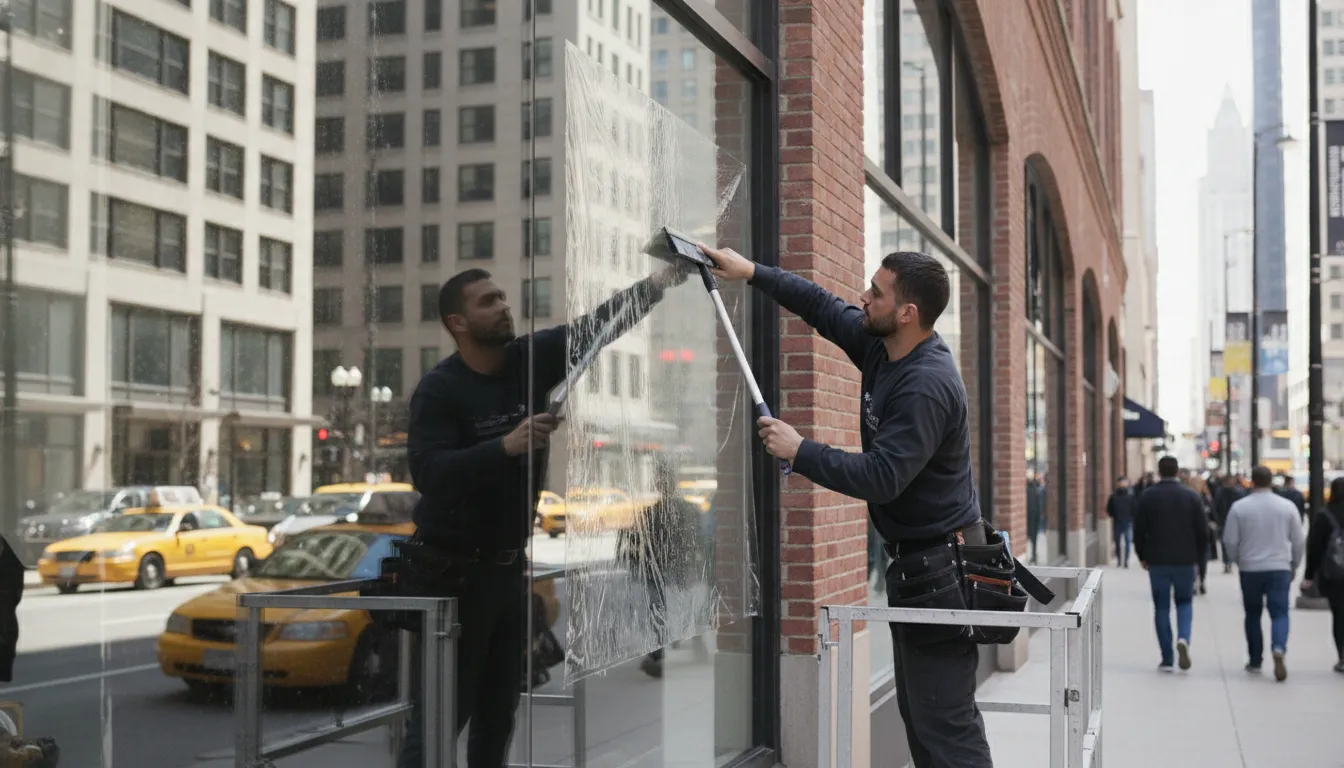
Clear protection only works as intended when it looks and performs like part of the storefront. Professional installation includes careful glass preparation, accurate measurement, and controlled application. The result should be seamless, without distracting bubbles, peeling edges, or a visibly patched appearance. When installed correctly, anti-graffiti film is virtually invisible and preserves the factory-finished look that customers expect from a well-maintained business.
It also changes the cleaning routine. Instead of relying on harsh graffiti-removal chemicals that can degrade glass over time, property teams can replace the damaged film when an incident calls for it. Anti-graffiti film is not a do-it-yourself project or a substitute for dedicated safety glass protection. It is a practical, low-profile window film system that helps keep commercial glass presentable and repairable after vandalism.
Why Chicago Storefronts Need Anti-Graffiti Film
For a Chicago storefront, graffiti is more than an eyesore. Tags, scratches, and etching can make a business appear neglected, distract from displays, and create another maintenance problem for owners and property managers. Because storefront glass faces the sidewalk, damage is highly visible and can be repeated when a vandal sees that a previous tag remains in place.
How Rapid Removal Deters Repeat Tagging
Visibility is part of what gives graffiti its notoriety. Research from Arizona State University’s Center for Problem-Oriented Policing reports that rapid identification and removal can reduce graffiti by reducing the attention associated with its continued visibility. The study describes a practical two-step approach: routinely monitor exposed surfaces, then remove vandalism promptly when it appears. Read the academic guidance on rapid graffiti removal.
That strategy is easier to carry out when the damaged surface is designed for maintenance. A business can address the visible damage and restore a clean appearance without leaving a tag in place for weeks. Prompt action also helps protect the storefront experience for customers, employees, and nearby tenants.
Anti-graffiti window film adds a sacrificial layer over the existing glass. The film takes the abuse from tagging, scratching, and some forms of etching, so the underlying panel remains protected. When the film is damaged, professional service can remove and replace the affected layer rather than replacing the entire storefront panel. This makes it a practical, cost-effective defense for Chicago businesses facing recurring vandalism, as documented in Sullivan’s customer guidance.
Professional installation is important to the result. Proper measurement, surface preparation, and application help the film maintain a low-profile, factory-finished look while the storefront’s glass, displays, and branding remain visible. It is an upgrade to the glass, not a temporary patch or a DIY project. A free estimate can help determine whether anti-graffiti film fits the storefront’s exposure, glass layout, and maintenance plan.
The Cost of Graffiti Glass Replacement Without Film Protection
When vandalism reaches a storefront, the visible damage is only part of the business cost. Paint, scratches, and etching can leave a glass panel permanently damaged, turning a routine cleanup into a repair or full replacement project. For a business with large panes or a custom storefront system, replacing the glass is a major interruption compared with replacing a protective film layer.
What Is at Stake Beyond the Repair Bill
Anti-graffiti film works as a sacrificial surface. It absorbs the abuse while the glass beneath remains protected. When the film is tagged, scratched, or etched, a professional installer can remove the damaged layer and apply a new one. That approach preserves the existing panel and limits the repair to the protective surface rather than the entire storefront assembly.
This distinction matters over the life of a property. A glass replacement may require measurement, fabrication, delivery, removal of the damaged panel, and installation of the new one. It can also affect adjacent framing, displays, or finishes. A film replacement is generally a more contained maintenance event. The exact solution depends on the glass, the damage, and the storefront design, so a professional assessment is the right starting point.
| Consideration. | Full glass replacement. | Anti-graffiti film replacement. |
|---|---|---|
| What is replaced. | The entire glass panel. | The sacrificial film layer only. |
| Typical steps. | Measurement, fabrication, delivery, removal, and reinstallation. | Cleaning, removal of damaged film, and application of new film. |
| Disruption to operation. | Often requires the display or area to be covered and access reduced. | Professional service can be scheduled and completed in a contained visit. |
| Effect on the original pane. | Original damaged glass is removed. | Original glass is preserved beneath the protective surface. |
| Fits with professional maintenance. | Ends when the new panel is installed. | Becomes part of a routine, damage-driven maintenance plan. |
The indirect costs can be just as disruptive. A damaged display may need to be covered or removed while the glass is being sourced. Reduced visibility can make a business look neglected, and construction activity can interfere with customer access. If the storefront remains damaged for days, the business may lose walk-in attention and sales during the repair window. Research from Arizona State University’s Center for Problem-Oriented Policing notes that graffiti is a costly and persistent problem. Cleanup alone runs an estimated $12 billion a year in the United States. Read the ASU research on graffiti costs and removal. Protecting glass with an anti-graffiti film system helps reduce the long-term repair and replacement costs that recurring vandalism can drive.
Which Chicago Business Types Benefit Most from Anti-Graffiti Film
Anti-graffiti film is a practical fit for businesses with glass at street level, where tagging, scratching, and etching can quickly affect the customer experience. Retail stores, restaurants, banks, pharmacies, and corner stores can use the film as a clear sacrificial layer over vulnerable storefront glass. It takes the damage instead of the original pane, allowing the damaged layer to be replaced without immediately replacing the entire glass panel.
Because the film is optically clear, storefront displays, interior merchandising, and exterior branding remain fully visible. Professionally installed window film also preserves a clean, factory-finished look, so the protection does not make a well-maintained business appear covered or obstructed. Owners evaluating broader upgrades can explore commercial window film for Chicago businesses alongside anti-graffiti protection.
A Fit for Property Managers and Retail Landlords
Ground-floor offices and mixed-use buildings are another strong application. Property managers and retail landlords often oversee multiple tenants, entrances, and shared areas, making recurring glass damage a maintenance issue rather than an isolated incident. Anti-graffiti film gives the management team a consistent way to protect exposed glass across storefronts, lobby sidelights, and other vulnerable panes while keeping the building’s appearance intact.
The film can also add a small degree of strength by helping hold glass fragments together when the pane is struck. That benefit should not be confused with dedicated safety or security film designed for stronger breakage or intrusion protection. If the priority is to protect commercial glass with safety film, a professional evaluation can help determine whether a security-focused product is more appropriate.
For Chicago businesses, the right choice depends on the glass location, exposure, tenant needs, and type of vandalism risk. Sullivan’s Window Tinting can recommend a window film solution and installation approach suited to the property, without sacrificing visibility or the finished appearance of the storefront.
How Often Is the Sacrificial Film Replaced?
Anti-graffiti window film is replaced when it has done its job, not on a fixed calendar. If a storefront is tagged, scratched, or etched, the damaged film can be removed and a fresh sacrificial layer professionally applied. The glass underneath remains the protected surface, so the response is focused on replacing the film rather than replacing an entire pane.
Damage determines the replacement schedule
There is no universal replacement interval for every Chicago storefront. A busy corner location, transit-adjacent property, or building with a history of vandalism may need film replaced more often than a quieter site. Routine visual checks make it easier to identify damage early, before it becomes part of the storefront’s appearance or affects the customer experience.
This damage-driven approach also supports a faster maintenance response. The sacrificial layer absorbs the paint, scratches, or etching, then a professional installer removes the affected material and prepares the glass for a new application. That process is generally quicker and less disruptive than arranging full-pane glass replacement, especially when the storefront is part of an active retail or commercial space.
Protection continues between film replacements
Anti-graffiti film is not only a response to vandalism. Between replacements, its optically clear surface helps preserve the factory-finished look of the glass while allowing displays, signage, and natural light to remain visible. The film can also block up to 99% of harmful UV rays, helping protect merchandise displays, furnishings, and interior fixtures from fading.
For many storefront owners, that combination makes the film part of routine property maintenance. The goal is not to wait for permanent glass damage or a visibly neglected facade. It is to monitor the surface, address vandalism promptly, and keep the underlying glass and storefront presentation in good condition through professional service.
Plan replacement around the storefront, not a preset date
A professional assessment can help determine whether the existing film needs replacement and whether other exposed glass should be protected as well. The right schedule depends on the location, the type of damage, and the condition of the current installation. Sullivan’s Tinting can recommend a practical maintenance approach without publishing one-size-fits-all pricing or treating every storefront the same.
Professional Anti-Graffiti Film Installation in Chicagoland
Anti-graffiti film performs best when it looks like part of the original storefront, not an added layer. That factory-finished appearance depends on professional measurement, glass preparation, and careful application. Sullivan’s Window Tinting is a family-owned and operated Chicagoland company established in 1988. With more than 36 years of experience helping property owners select and maintain practical window film solutions.
Why installation quality matters
The professional installation process follows a clear sequence:
- Assess the storefront glass and measure each area before cutting the film.
- Clean and prepare the glass surface so it is free of dust and residue.
- Apply the film carefully, working out air and moisture for a smooth, low-profile finish.
- Inspect the edges and finished surface to confirm a factory-finished look.
When installed correctly, optically clear anti-graffiti film is virtually invisible from the sidewalk. Your displays, branding, and natural light remain visible, while the film provides a sacrificial surface that can be replaced if it is tagged, scratched, or etched. It is a different solution from dedicated safety or security film, so a consultation helps match the product to the storefront’s actual risks. Learn more about why professional installation of anti-graffiti film matters before choosing an installer.
Local service for commercial storefronts
Sullivan’s serves businesses in Chicago, Wauconda, Barrington, Hoffman Estates, Northbrook, Schaumburg, and Arlington Heights, along with parts of Wisconsin including Delavan, Elkhorn, and Racine. Local experience supports a practical, consultative process: assess the glass, discuss exposure and maintenance needs, and recommend the appropriate window film rather than treating every project the same.
Professional anti-graffiti protection can also help preserve storefront displays between film replacements by blocking up to 99% of harmful UV rays. To explore anti-graffiti window film services for your property, request a free estimate. Sullivan’s can review your glass and recommend a suitable installation plan without publishing a one-size-fits-all price.
Frequently Asked Questions
What is anti-graffiti film, and how does it protect storefront glass?
Anti-graffiti film is an optically clear, sacrificial layer applied to existing storefront glass. It takes the abuse from spray paint, scratches, gouges, and acid etching, helping keep the glass underneath untouched. When the film is damaged, a professional installer can remove and replace the affected layer instead of replacing the entire pane.
Does anti-graffiti film affect window clarity or storefront branding?
Quality anti-graffiti film is designed to remain clear and low profile, so customers can still see displays, branding, and merchandise through the glass. Professional cleaning, measurement, and application help produce a smooth, factory-finished look rather than a visibly patched surface.
Is anti-graffiti film worth it for Chicago retailers?
For storefronts exposed to recurring tagging or vandalism, the film provides a practical way to protect glass and reduce disruption. A damaged film section can be replaced without waiting for a full glass panel replacement, while a clean storefront helps preserve the business’s public image. A free estimate can help determine whether the protection fits your location and glass layout.
How often does sacrificial film need to be replaced?
Replacement is damage-driven, not based on a fixed calendar. The film should be assessed after tagging, scratching, or etching, then replaced when its appearance or protective function is compromised. Routine monitoring and prompt graffiti removal can also help discourage repeat vandalism.
Can anti-graffiti film be installed on existing storefront windows?
Yes. Professional installers clean and prepare the existing glass, measure each area, and apply the film as a protective outer layer. Because the work is fitted to the storefront, an experienced installation can provide seamless coverage without requiring the business to replace otherwise serviceable glass.
Ready to Protect Your Chicago Storefront?
A professional assessment can help you determine whether anti-graffiti window film fits your storefront, glass layout, and vandalism concerns. Sullivan’s Tinting can recommend an appropriate film system and explain how professional installation supports a clean, factory-finished look. To discuss your property and request a free estimate, request a free estimate.