
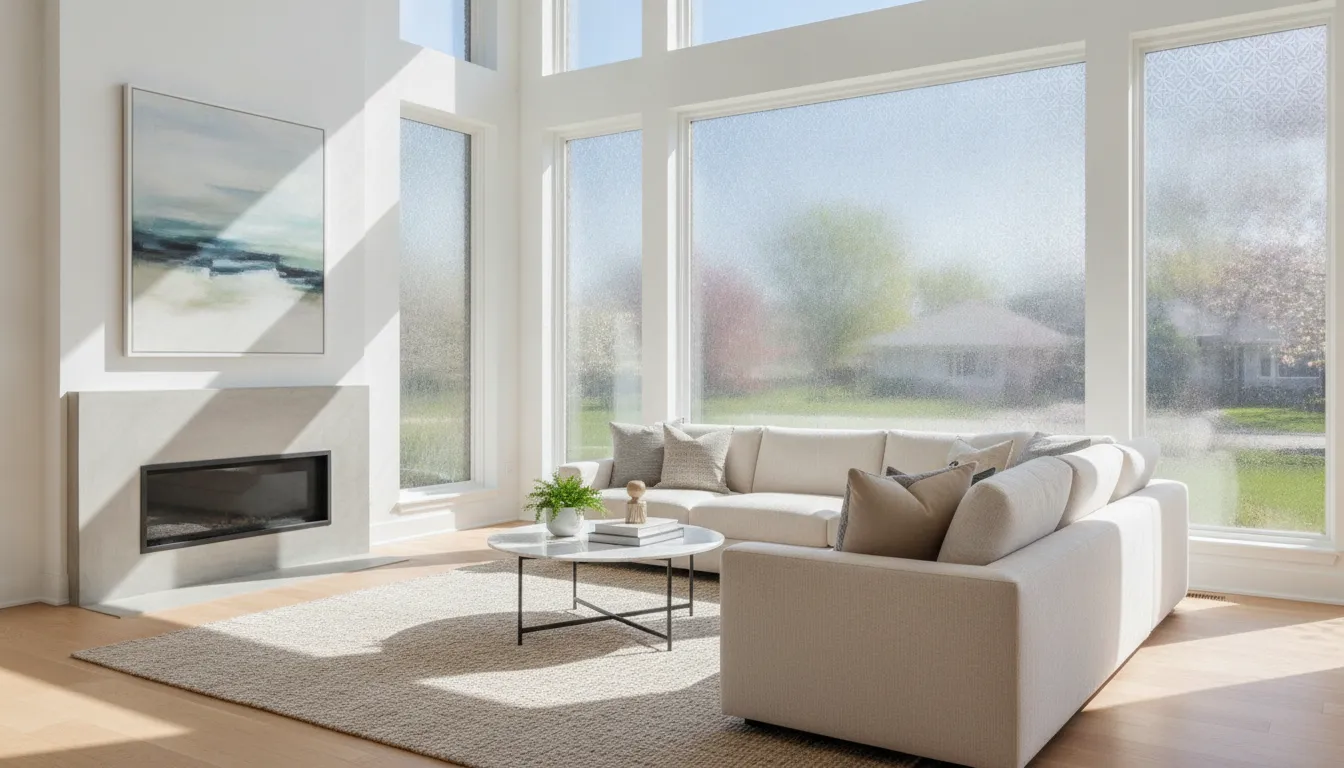
Modern window film blocks invisible heat without stealing the natural light that defines your home’s character. This upgrade is a key part of The Complete Homeowner’s Guide to Residential Window Film in Chicagoland because it protects your interior without blocking the view.
Will window film make house dark is a common question that stems from the dark, dyed products of the past. Modern residential window films use ceramic particles to block heat and 99% of UV rays while letting most natural light pass through. Most homeowners only see a small drop in light compared to untreated glass, which the human eye usually does not notice. According to Solar Gard, high-quality ceramic films can reject up to 60 percent of solar energy without making a room feel dim. Sullivan’s Tinting has helped Chicago families keep their views and natural light since 1988. This upgrade provides a clean look that cuts glare while keeping your home bright and inviting during every season.
Many people still have bad memories of purple, bubbling tint that ruined the look of homes in the past. These old products created a dark, gloomy feeling that modern films do not share. The Darkness Myth: Where It Comes From explores why these fears exist and how new technology has changed everything.
Will Window Film Make House Dark: The Darkness Myth: Where It Comes From
The worry that window film will turn your home into a dark cave is common, but it is based on old ideas. For many people, the “dark house” myth comes from how the industry worked years ago. In the past, the only way to block heat was to make the film very dark and thick.
How Old Tools Fed the Myth
Before the year 2000, most window films were simple dyed items. These early films used deep dyes to soak up solar heat before it could enter your home. Because they used dark colors, they truly did cut the light in a room. Many people from that time recall rooms that felt dim after a new tint was put in.
Those old films also had a habit of changing color over time. Many people saw car or home windows turn a strange shade of purple as the dye broke down. This purple tint was a sign of low quality, but it left a mark on how people view window film today. At Sullivan’s Tinting, we have served Chicagoland since 1988. We have seen these old items firsthand during our 36 years in the trade.
Comparing Film to Blinds and Shades
Another reason people fear a dark home is that they mix up window film with other window tools. Standard blinds and thick curtains block heat by blocking all light. To keep a room cool in the summer, you must close the drapes and sit in the dark. This makes you pick between a view and a cool room.
Modern home film solves this by working in a new way. While old dyed films and heavy blinds shut out the sun, new tools let you keep your view. You can find out more about these choices in The Complete Homeowner’s Guide to Residential Window Film in Chicagoland. Today, you do not have to live in a dark house to have a cool and safe living space.
How Modern Window Film Technology Has Changed
Old window films from years ago often made homes look dark and gloomy. Those early films used heavy dyes to soak up heat, which also blocked much of the light people wanted. Now, the field has shifted to new tech that works in a better way. Modern window film uses tiny ceramic particles to filter sunlight with great care.
Careful light filtering
Sunlight has three main parts: UV rays, visible light, and infrared heat. Old films blocked all three at once. New films are spectrally selective. This means they target the parts of the sun you do not want. Sullivan’s window film blocks 99 percent of harmful UV rays. This tech lets most visible light pass through your glass while it keeps your home cool.
Cool homes without dark glass
Since ceramic films do not use dark dyes, they can work well while they stay clear. These films use tiny parts to reflect heat away from your house. You get the benefits of home window film energy savings without a dark look. Many people find their rooms still feel bright after the work is done. You can read more about these films at energy.gov.
Better views and less glare
Modern film tech does more than just block heat. It also helps cut glare by 40 to 60 percent. This often makes it much easier to see screens or TVs during the day. By cutting down on bright spots, the film helps your view. It does not make the room feel closed off. You can see how this helps on the nrel.gov site.
VLT Ratings Explained: What the Numbers Mean
Visible Light Transmission (VLT) is the key number for picking window film. It shows how much light comes through the glass and into your home. At Sullivan’s Window Tinting, we help you find the best rating. Our goal is to keep your rooms bright while adding the protection you need.
How glass and film compare
Most clear glass has a VLT rating of about 80 to 90 percent. This means some light is lost even through plain glass. High-quality residential window film often sits between 50 and 70 percent VLT. While these numbers look different, the change is small to the human eye.
A film with a 70 percent VLT rating only drops light by 10 to 20 points compared to clear glass. Data from Solar Gard shows that a 70 percent film looks nearly the same as clear glass. It stays clear enough that most people cannot tell it is on the window. You get the benefits of a cool room without a dark view.
Common VLT light levels
- 80% to 90% VLT: This is standard clear glass or clear safety film. It lets in full light with no tint.
- 50% to 70% VLT: This is the best range for homes. It blocks solar heat but keeps the room bright.
- 35% VLT and below: These dark films are common for cars. Most owners find these too dark for a living room.
Why car tint is different
Many people worry about darkness because they think of car tint. Car windows often use 20 percent or 35 percent VLT to stop people from seeing inside. Home films are made for a different goal. They use tiny particles to stop heat and UV rays instead of just making the glass dark. This lets you get privacy and heat control without losing the light you want.
Which Film Types Let the Most Light Through?
Not all window films are made the same way. The type of film you choose has a direct impact on how much light stays in your room. This guide compares the three main types of residential window film so you can see the difference before you buy.
| Film Type | VLT Range | Heat Rejection | Appearance | Best For |
|---|---|---|---|---|
| Ceramic | 50-70% | 50-80% infrared | Clear, neutral tone | Bright rooms that need maximum heat control |
| Spectrally Selective | 60-70% | 40-60% total solar | Nearly invisible | Homes wanting minimal visual change |
| Dyed (Legacy) | 15-35% | 20-40% total solar | Dark, can fade to purple | Not recommended for modern homes |
Ceramic film: the best choice for natural light
Ceramic window film is the top option for homeowners who want heat protection without a dark look. It uses nanoparticles that block infrared and UV rays while visible light passes through freely. A 70 percent VLT ceramic film looks almost identical to clear glass while rejecting up to 60 percent of total solar energy. This makes it ideal for living rooms, kitchens, and home offices where brightness matters most.
Spectrally selective film: the invisible protector
Spectrally selective films are engineered to filter specific wavelengths of light. They allow the highest visible light transmission of any film type while still blocking UV rays and infrared heat. According to the U.S. Department of Energy, spectrally selective films can block up to 97 percent of infrared radiation while transmitting more than 70 percent of visible light. For homeowners who want the glass to look completely unchanged, this is the best option.
Why dyed film is no longer recommended
Dyed window film is the old standard that created the “dark house” myth in the first place. These films use dyes to absorb heat, which means they must be dark to work. They also fade and discolor over time, often turning a purple shade that is both ugly and inefficient. Modern homes should choose ceramic or spectrally selective films to get the benefits of home window film energy savings without sacrificing natural light.
Which Film Types Let the Most Light Through?
Modern window films give you many ways to manage light and heat. Picking the right film depends on your goals. You might want a light tint for privacy or a clear shield that keeps rooms bright. Top films let in lots of day light. They also block the parts of the sun that cause heat and fading.
Ceramic Film for a Clear Look
Ceramic window film is the top choice if you want to keep your house bright. It uses tiny bits of ceramic to block heat. But it still lets most light come in. A good ceramic film keeps your windows clear. It also stops up to 99 percent of UV rays. This type of film is great for living rooms where you want a clear view of the yard.
Most clear glass lets in 80 to 90 percent of light. High-quality ceramic films let in 50 to 70 percent. This small change is hard to see. But the heat drop is huge. You will feel a big change in heat while your rooms stay bright and sunny.
Spectrally Selective Options for High Work
Spectrally selective films are a smart way to stop solar heat. These films target the parts of the sun that cause the most heat. This lets them keep your home cool without making it dark. The U.S. Department of Energy says window films are a good way to save energy. These films look clear on the glass but offer strong help for your home.
If you have special needs, you can look at privacy window film for homes. You might also want safety film for glass. Both types use new tech to keep your home bright. They provide safety or privacy without the gloom of old, dark tints.
| Film Type | Light Level | Heat Control | Look | Life |
|---|---|---|---|---|
| Ceramic | 50% – 70% | High | Clear | Very Long |
| Spectrally Selective | 60% – 75% | High | Invisible | Very Long |
| Hybrid | 35% – 50% | Medium | Light Tint | Long |
| Dyed | 5% – 20% | Low | Dark Tint | Short |
Expert Help for Your Chicagoland Home
At Sullivan’s Tinting, we help you find the right film for your home. Our team has over 36 years of local work. We have helped many people in the Chicagoland area since 1988. We know how the sun hits homes in our cities. We offer pro work and full warranties. This ensures your home window film works well for a long time. We provide free estimates to help you understand your choices.
What Chicago Homeowners Report After Installation
Most Chicago homeowners expect a darker house, but they find the opposite is true. After a professional job, the main thing people see is how clear the view stays. Modern window film cuts down on harsh glare from the sun. This change makes it much easier to see phone screens and TV sets during the day. You can keep your blinds open and still see your screen without any eye strain.
Rooms feel cool not dark
Local homeowners often say their rooms feel much better once the film is on the glass. The space stays cool even during a hot July day in the city. Since the film targets heat rather than light, the room does not lose its bright feel. You get the benefits of home window film energy savings without making the space feel dim. People say their homes feel more open because they no longer need to close thick drapes to stay cool.
Testing light levels in peak sun
Many people choose a summer start to see the results for themselves. When the sun is high, you can see that the glass looks about the same. Sullivan’s gives free estimates that show film samples on your actual windows. This help lets you see how much light enters the room before you buy. Most quality solar films let in 50 to 70 percent of light, as noted by the U.S. Department of Energy. This level keeps your home bright while it stops 99 percent of UV rays.
Small visual change documented
Pro installers often take photos of rooms before and after the work is done. These shots prove that there is very little change to the room’s light. The view outside stays sharp and natural. To learn more about how this works, you can read The Complete Homeowner’s Guide to Residential Window Film in Chicagoland. This guide shows how modern tech keeps your home light while it blocks solar heat.
Frequently Asked Questions About Window Film and Home Brightness
Will window film make my room too dark?
No, not with modern residential window film. Quality ceramic and spectrally selective films transmit 50 to 70 percent of visible light, compared to 80 to 90 percent for clear glass. The 10 to 20 percentage-point reduction is barely perceptible to the human eye, while heat rejection of 50 to 80 percent makes rooms feel dramatically cooler. Sullivan’s offers free estimates where you can see film samples on your actual windows before making a decision.
What VLT percentage should I choose to keep my home bright?
For maximum brightness, choose a film with a VLT of 70 percent or higher. A 70 percent VLT ceramic film looks virtually unchanged from untreated glass while rejecting 40 to 60 percent of total solar energy. Films rated between 50 and 70 percent VLT offer an excellent balance of heat control and natural light for most Chicagoland homes.
Can you see through window film at night?
Yes, from the inside looking out. Most residential window films are designed to maintain outward visibility at all times. The reflective effect that provides daytime privacy works in the opposite direction at night when interior lights are on. So adding blinds or curtains for nighttime privacy is still recommended if needed. This is true for all residential privacy window film for homes.
Is residential window film the same as car window tint?
Will modern window film turn purple like the old tints did?
No, not at all. The purple discoloration was caused by the dyes used in older window films from 20 to 30 years ago. Modern ceramic and spectrally selective films use nanoparticle technology instead of dyes, so they do not fade, discolor, or turn purple over time. Sullivan’s uses high-quality films with manufacturer-backed warranties that guarantee long-lasting clarity and performance.
Ready to see the difference for yourself?
Waiting to upgrade your windows means another season of high cooling bills and fading furniture. You can protect your home today without losing the natural light you love. Our team helps you pick the perfect film to block heat and UV rays while keeping your rooms bright. Acting now ensures your home stays cool and comfortable all year long.
Ready to schedule a free window film estimate? Request your free estimate to get started with a local expert.