
Uncovered home windows can make you feel like you are living on a public stage. While blinds and heavy drapes shut out the world, they also block the warm sunlight and ruin your outdoor views. Adding premium residential window film is a smart way to reclaim your personal space without sacrificing natural light.
Ready to regain your privacy without losing your view? Request your free estimate today or call (847) 875-6969 to speak with our local window film experts.
Privacy window film for homes uses thin, reflective layers to manage how light travels through your glass. During the daytime, bright sunlight outside bounces off micro-thin metal or ceramic particles within the film, creating a mirror effect that blocks outsiders from seeing in. Meanwhile, the lower light level inside your home allows you to enjoy a clear, unobstructed view of your yard. This non-invasive upgrade keeps your rooms bright, shields your furniture from sun damage, and lowers your cooling bills. Because the film works by balancing light, the one-way effect is strongest when the outside is much brighter than the inside.
Before you choose a style for your home, it helps to understand how different types of film behave throughout the day and night. Let us examine the science behind these upgrades and what they mean for your home.
Privacy Window Film For Homes: How Does One-Way Privacy Window Film Work?
Privacy window film creates a one-way mirror effect using precision-engineered layers. The technology is straightforward but the results are impressive. Here is how it works:
- Micro-thin metallic layer. A microscopic coating of metal or ceramic particles is deposited on a durable polyester base. This layer reflects light like a mirror on the side that receives the brightest illumination.
- Selective light transmission. The same metallic layer allows some light to pass through to the darker side. This lets people inside a dimmer room see out clearly while outsiders only see their own reflection.
- Daylight dependence. The mirror effect is strongest during peak sunlight hours. Bright outdoor light maximizes the reflective property, which makes street-facing windows opaque from the outside while preserving your view of the neighborhood.
High-performance residential window films use advanced sputter-coating technology to deposit multiple layers of metals like stainless steel, titanium, or silver onto the film base. This creates superior optical clarity and longer-lasting performance compared to dyed films. The result is a factory-finished appearance that maintains consistent reflectivity across the entire glass surface, year after year.
The Light Balance Rule Explained
The one-way mirror effect is not a fixed property of the film itself. It depends entirely on the light levels on each side of the glass. The brighter side always becomes the mirror. During the day, the sun makes the outside of your home significantly brighter than the interior, creating the privacy effect. At night this balance reverses. If you have indoor lights on, the brighter interior makes the glass transparent from outside and reflective from inside. Quality window film still provides UV protection, glare reduction, and energy savings around the clock, but the privacy effect is daytime-only for reflective films.
Beyond Privacy: Energy and UV Benefits
Privacy window film delivers benefits that go far beyond blocking views:
- UV protection. Professional-grade film blocks up to 99% of harmful UV radiation, which prevents fading of hardwood floors, furniture, curtains, and artwork.
- Solar heat reduction. Reflective films reject a significant percentage of incoming solar heat. This keeps your rooms cooler in summer and reduces the workload on your HVAC system.
- Glare reduction. Film cuts down harsh glare on television screens, computer monitors, and reflective surfaces without dimming the natural light that makes your home feel open and welcoming.
- Glass safety. The film holds glass fragments together if a window breaks, which adds a layer of protection against accidents and weather events.
Daytime vs. Nighttime Privacy: What Every Homeowner Should Know
The most common mistake homeowners make is choosing reflective privacy film expecting 24/7 isolation. They discover that one-way glass behaves very differently after sunset. Understanding this difference is essential to selecting the right product for your home.
Why Daytime Privacy Works So Well
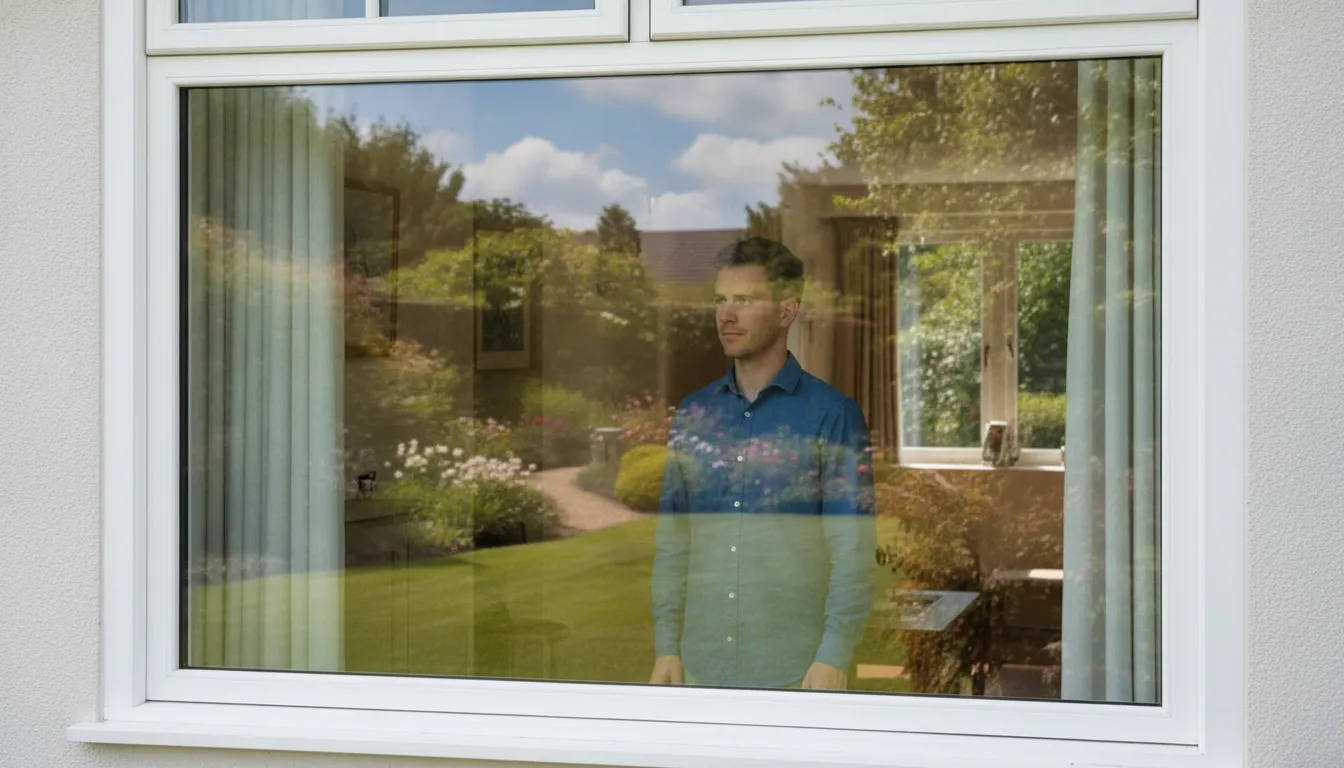
During daylight hours, one-way privacy window film for homes relies on abundant outdoor light. Sunlight strikes the metal layer and reflects outward, turning your windows into a reflective shield. Because the sunlit outdoors is much brighter than your interior, anyone looking from the street sees only the reflection of the sky and trees. Meanwhile, you enjoy a crystal-clear view of your yard. The same solar control technology blocks 99% of UV rays, which prevents your floors and furniture from fading.
The Nighttime Reversal
When the sun sets, the light balance flips completely. Interior lights make your rooms brighter than the dark yard outside. This reverses the mirror effect: the glass becomes transparent from outside, exposing your living spaces to anyone passing by. Simultaneously, the glass acts as a mirror from inside, making it difficult to see out into your yard. This is why homeowners who want full-time privacy should consider decorative window film for privacy. Frosted or patterned films obscure vision from both sides regardless of light levels. Which makes them ideal for bathrooms, front entryways, and anywhere you never want to draw blinds.
Comparing Privacy Film Options
| Factor | Reflective Solar Film | Frosted Decorative Film |
|---|---|---|
| Daytime privacy | Excellent mirror effect, clear view out | Complete 24/7 obscurity |
| Nighttime privacy | Requires blinds or curtains | Complete 24/7 obscurity |
| Natural light transmission | High, preserves view | Moderate, diffuses light |
| Heat rejection | Strong solar control | Low to moderate |
| UV protection | Up to 99% | Depends on film specification |
| Best use cases | Living rooms, bedrooms, sunrooms | Bathrooms, entryways, office glass |
For homeowners who want the energy savings of reflective film but need nighttime privacy, the practical solution is simple: pair reflective film with blinds or curtains. During the day you enjoy the open view and heat control; at night you close the blinds for complete seclusion. This combination outperforms blinds alone because the film continues providing UV protection and glare reduction even when the blinds are open.
What Are the Best Privacy Film Types for Your Home?
Different privacy challenges call for different film technologies. The right choice depends on when you need privacy, which rooms you are treating, and how much natural light you want to keep. Here is a breakdown of the three main categories:
- Reflective mirror films. Ideal for street-facing windows where daytime privacy and heat control are the priority. These films create a one-way mirror effect using a thin metal layer. They cut solar heat gain significantly, which lowers your cooling costs in summer. The trade-off is that they lose their privacy effect after dark unless paired with blinds.
- Frosted and decorative films. Best for 24/7 privacy needs. These films use textured or matte patterns to obscure vision from both sides at all times. They do not rely on light balance, so they work equally well day or night. Frosted films let soft, natural light filter through while completely blocking the view. They are a stylish, budget-friendly alternative to etched glass and work perfectly in bathrooms, front entryways, and ground-floor windows where privacy is a constant concern.
- Dual-reflective films. A hybrid option designed to reduce the nighttime mirror effect on the interior side. The outer face stays highly reflective for daytime privacy, while the inner face has a lower reflection level. This gives you a clearer view outside at night compared to standard reflective films. While dual-reflective films still do not offer full nighttime privacy without window treatments, they provide a better appearance from inside the room.
You can explore specific patterns and styles through our decorative and privacy film solutions to see what fits your home. A professional consultation is the best way to match film type to your specific windows, light exposure, and privacy goals.
Where Do Homeowners Install Privacy Film Most Often?
Privacy film is one of the most versatile home upgrades available. It works on virtually any smooth glass surface without requiring structural changes. Chicagoland homeowners tend to install it in these high-priority areas:
- Bathrooms. The most common location. Bathroom windows near showers or tubs let in natural light but expose you to neighboring homes. Frosted decorative film provides 24/7 privacy while preserving brightness. It is a simple solution that transforms an uncomfortable space into a relaxing retreat.
- Front door sidelights and entryways. Glass panels next to front doors are a favorite target for passersby. Applying decorative or frosted film blocks the view into your foyer while maintaining an inviting, light-filled entrance.
- Ground-floor living rooms and bedrooms. Rooms at street level face constant exposure to sidewalks and neighbors. Reflective film provides daytime privacy and a clear outward view, eliminating the need for closed curtains that darken the space.
- Garages and basement windows. These areas store tools, equipment, and vehicles. Clear glass makes it easy for thieves to assess your belongings. A dark or frosted film hides the contents while admitting natural light for workspace visibility.
- Home offices. With more people working remotely, privacy film on office windows reduces distractions from outside movement and protects sensitive documents or equipment from view.
Selecting the right film for each room makes a significant difference in performance. A professional installer can evaluate your specific light conditions and glass types to recommend the ideal match. Residential window film services from an experienced team ensure a clean, factory-finished installation with no bubbles, dust spots, or peeling edges.
Frequently Asked Questions About Privacy Window Film for Homes
Does privacy window film for homes work at night?
Standard reflective one-way privacy film does not provide privacy at night. The mirror effect depends on the brighter side of the glass being outside. When your interior lights are on after dark, the brightness flips and outsiders can see in. For nighttime privacy you need either frosted decorative film or a combination of reflective film with blinds or curtains drawn after sunset. Electric switchable film, which changes opacity at the flip of a switch, is another option for rooms where you want on-demand privacy.
Does privacy window film block natural light?
Quality privacy film does not block natural light from entering your home. Reflective films reduce glare and reject solar heat while allowing most visible light to pass through. According to industry research, window film preserves natural light transmission far better than blinds or curtains. Frosted films diffuse light softly, which creates a warm, even illumination without harsh shadows or direct glare.
Can I install privacy window film myself?
DIY kits are available, but professional installation is strongly recommended for residential applications. Proper installation requires thorough glass cleaning, precise cutting to match your window dimensions, and specialized tools to remove every air bubble and moisture pocket. Professional installers deliver a factory-finished appearance that preserves manufacturer warranties and lasts for years without peeling or discoloration. They also help you choose the exact film specification for your windows to avoid costly mistakes.
Does privacy window film provide UV protection?
Yes. Professional-grade privacy window film blocks up to 99% of harmful ultraviolet radiation. This protection is essential for preserving your furniture, hardwood floors, and window treatments, as UV exposure is the primary cause of fading. It also reduces your family’s exposure to UV radiation inside the home without requiring you to give up natural daylight or outdoor views.
How much does privacy window film cost?
Pricing for privacy window film varies based on window count, glass dimensions, film type, and installation complexity. Reflective solar films and frosted decorative films are priced differently, and larger or unusually shaped windows require more material and labor. Because every home is different, Sullivan’s Tinting provides custom free estimates with no obligation. A professional can measure your windows, discuss your goals, and give you an accurate price tailored to your project.
What is the best film for bathrooms and front doors?
Frosted or decorative privacy film is the best choice for bathrooms and front entryways. These films obscure vision from both sides day and night without relying on light levels. They let soft, natural light through while completely blocking the view. This makes them ideal for ground-floor bathrooms, powder rooms with street-facing windows, and front door sidelights where you never want to worry about drawing blinds. Decorative patterns also add a stylish design element that enhances your home’s aesthetic.
Ready to See Out, Not In?
Living with exposed windows makes your home feel less like a private retreat. Clear glass leaves your family visible to neighbors and passersby. A professional privacy window film installation helps you reclaim your personal space while keeping your rooms bright and your energy costs under control. Since 1988, our family-owned team has delivered clean, factory-finished residential results across the Chicagoland area and select Wisconsin communities.
Your path to a more comfortable and private home starts with a simple conversation. We discuss your goals and recommend the right film for each room. Our local specialists measure your glass and prepare for a dust-free application. We install your selected film to create a perfect, bubble-free finish that lasts. Ready to schedule your free privacy film estimate? Request your free estimate or call us at (847) 875-6969 to discuss your project with our Chicagoland window film experts today.